 By Alisa Schlosser, Career Consultant at EP Advisory
Located right in the centre of Western Europe, Switzerland is one of the most sought-after destinations for expats in 2026. Known for its political neutrality and stability, it has become a top choice for professionals from Russia, Kazakhstan, Belarus, and across the globe looking for a reliable and rewarding place to build their career. Add to that the stunning mountains, pristine lakes, and some of the highest salaries on earth, and it is easy to see why. The gross median wage in Switzerland is 7,024CHF (about US$8,400) per month (2024 data), which is among the highest in the world! Dollar figures on this page use the European Central Bank reference rate of 29 September 2026: 1 CHF = about US$1.20.
However, finding a job in Switzerland as a foreigner can be challenging due to the country’s strict immigration policies, competitive job market, and high demand for multilingual skills. Switzerland is not part of the EU, and stringent visa rules apply, especially for non-EU citizens. The unemployment rate is low, at around 3% (SECO registered rate, 2026), largely thanks to strict rules that ensure that residents are always considered for vacancies first. Learn more about Switzerland’s economic landscape and unemployment statistics here. Nevertheless, it is possible for foreigners to get a job in Switzerland that will qualify them for a residence permit.
In this full expat guide on how to find a job in Switzerland, we hear from Alice Schlosser, an experienced career coach who moved from abroad and worked for Swiss-based companies. Read on for a general overview of the job market in Switzerland, information on who can work in the country, advice for searching for jobs in Switzerland, tips for the application and interview process, and whether you’ll need career coaching.👇🏻
Understanding the job market in Switzerland: high salaries, low unemployment rates and more
High Salaries. While Switzerland is within the Schengen Area, it is not a member of the European Union. This has given the country a great deal of control over economic growth and immigration. The result is a strong economy, high salaries, low unemployment, and excellent social security.
Unemployment Insurance Scheme. Swiss salaries are among the highest in the world, and the unemployment insurance scheme is generous. For example, if a Swiss resident worked for 18 months and then lost their job, they could receive 70% of their insured salary (80% with dependent children or a low salary) for up to 400 working days, about 18 months. But a variety of government programs are in place to help them find new work much sooner.
Work-life Balance. There is no national minimum wage in Switzerland (five cantons set their own), but that does not mean that the job market is not regulated. All employees are entitled to a minimum of four weeks of annual leave each year plus public holidays. Working weeks are also capped by law at 45 hours for industrial, office, technical and large-retail staff, and at 50 hours for most other workers. Taken together this creates a country with a positive work-life balance.
International Companies. The economy is strong in finance, pharmaceuticals, technology, manufacturing, and tourism. It is home to many international companies such as Nestlé, Novartis, Roche, and UBS.
Multilingualism. Switzerland is a multilingual country with four official languages, German, French, Italian, and Romansh, with the dominant language depending on the region. English is also widely spoken in the workplace. Multilingualism is a valued skill.
While about one in three people working in Switzerland (including cross-border commuters) is a foreign national, the rules for foreign workers are extremely strict, and most foreign workers are considered highly skilled.
Average and median salary in Switzerland (2026)
For a deeper breakdown, pay by sector, what disappears in deductions and what life actually costs, see our dedicated guide: Salaries in Switzerland.
The median full-time wage in Switzerland is CHF 7,024 per month gross (Federal Statistical Office, 2024 data published November 2025). That works out to roughly CHF 84,300 a year. The FSO monthly figure already includes one-twelfth of any 13th-month salary, so do not add it again. After social deductions, net pay is around CHF 5,970 per month. Remember the median is a gross figure, not take-home.
Pay varies widely by role, sector and canton. The table below shows official median gross pay for broad occupation groups from the FSO wage survey (2024 data), plus official figures for doctors and nurses. The FSO does not publish medians for single job titles. Net pay is estimated at about 85% of gross, after social deductions and before income tax.
| Role | Gross CHF/mo | Gross CHF/yr | Net CHF/mo (est.) |
|---|---|---|---|
| National median (whole economy, FSO) | 7,024 | ~84,300 (×12; the FSO figure already includes the 13th salary) | ~5,970 |
| ICT professionals, e.g. software developers (FSO, ISCO 25) | 9,949 | ~119,400 | ~8,460 |
| Science and engineering professionals, incl. architects and civil engineers (FSO, ISCO 21) | 8,730 | ~104,800 | ~7,420 |
| Health professionals, e.g. doctors, graduate nurses, pharmacists (FSO, ISCO 22) | 8,000 | ~96,000 | ~6,800 |
| Nurse, tertiary-trained (FSO analysis for the FOPH, 2018 data) | 7,429 | ~89,100 | ~6,310 |
| Building trades workers, excl. electricians (FSO, ISCO 71) | 6,172 | ~74,100 | ~5,250 |
| Construction and other labourers (FSO, ISCO 93) | 5,541 | ~66,500 | ~4,710 |
| Doctor, salaried specialist (median, 2014 data, study for the FOPH) | n/a | ~197,100 | n/a |
| Doctor, resident, years 1–4 (Canton of Zurich pay scale 2026) | n/a | ~103,000–115,000 | n/a |
A few things to keep in mind. Net take-home is roughly 75-85% of gross, depending on your canton and the income tax withheld at source. The FSO monthly figures already include one-twelfth of any 13th-month payment, so the yearly column is 12 times the monthly one. Switzerland has no national minimum wage; only five cantons set one (see the minimum-wage section). For the ICT sector as a whole (all jobs in the sector, not only ICT professionals), the FSO median is CHF 9,473 per month (about CHF 113,700 a year, 2024 data).
Taxes and take-home pay in Switzerland
Your net salary in Switzerland is roughly 75-85% of your gross pay, depending on canton and income. Two layers come off your gross wage, so always confirm whether a quoted figure is gross or net.
Social deductions (~13-15% of gross)
First come the social contributions, taken off your gross wage before income tax. They include AHV/IV/EO old-age and disability insurance at 5.3% and unemployment insurance (ALV) at 1.1%. Your share of the occupational pension (BVG) comes on top. The legal minimum savings credit is 7%, 10%, 15% or 18% of your insured salary, rising with age, and your employer pays at least half. Non-occupational accident insurance is also deducted, at a rate set by the insurer.
Income tax withheld at source
If you do not hold a C permit (and are not married to a Swiss citizen or C-permit holder), your employer withholds income tax directly from each payslip. This is called Quellensteuer, and it covers federal, cantonal and municipal tax in one monthly line. Tax rates vary widely by canton, with Zug among the lowest and Geneva among the highest. Earn over CHF 120,000 per year and a full tax return becomes mandatory.
Worked example
Take the national median of CHF 7,024 per month gross. After social deductions of about 15%, that leaves roughly CHF 5,970. Tax at source then comes off that amount, so take-home is lower still. In a higher-tax canton it lands nearer the 75% end of the range.
Minimum salary in Switzerland
Switzerland has no national minimum wage. Pay is set by the employer, by sector collective labour agreements (CLAs) and by the market. There is no single legal salary floor that applies across the whole country.
Five cantons do set their own minimum wage. Geneva’s is the highest of the five. From 1 January 2026 it is CHF 24.59 per hour, which works out to roughly CHF 4,475 per month gross for a 42-hour week (about US$5,370). The other four sit a little lower. In June 2026 Parliament passed a federal law that would let the minimum wages in nationwide collective labour agreements take precedence over cantonal minimums. As of September 2026 it is not in force. Unions have launched a referendum against it, and the deadline to file it is 8 October 2026 (Federal Gazette). If it gathers the 50,000 signatures needed, voters will decide.
| Canton | Minimum wage (gross, per hour) |
|---|---|
| Geneva | CHF 24.59 (from 1 Jan 2026) |
| Basel-Stadt | CHF 22.20 |
| Neuchâtel | CHF 21.35 |
| Jura | CHF 21.40 |
| Ticino | ~CHF 20.00–20.50 |
Everywhere else, the practical floor is set by the market, not the law. The FSO wage survey gives an official guide (full-time, 2024 data). One employee in ten earns less than CHF 4,635 per month gross. The median for jobs with simple physical or manual tasks is CHF 5,121 per month gross. For practical jobs such as sales, care, admin and machine operation it is CHF 5,866 per month gross. These monthly figures already include one-twelfth of any 13th-month salary.
For context, the national median wage is about CHF 7,024 per month gross (around CHF 84,300 a year, with any 13th-month salary already included). These are gross figures, before social deductions and income tax. Net take-home is typically 75–85% of gross, depending on your canton.
Can you hire skilled staff at or near these minimums? In short, no. Cantonal minimums are a legal floor, not a market rate. Professionals in fields like technology, engineering and healthcare expect pay well above them, mainly because the cost of living is high. You may fill some lower-wage retail or hospitality roles near the floor. A specialist on a minimum wage is very unlikely.
What changed for 2026: work permit quotas frozen
The Swiss Federal Council has confirmed the third-country work permit quotas for 2026: 8,500 permits for non-EU/EFTA professionals, split into 4,500 residence (B) permits and 4,000 short-stay (L) permits, unchanged from 2025.
Here is the encouraging part: these quotas are rarely exhausted. In 2024, only around 74% of available permits were actually used. In practice, this means the door remains open for skilled non-EU professionals. The quota is not the bottleneck, the real hurdle is that your employer must justify hiring you over an EU/EFTA candidate. That makes positioning, specialisation and a sharp application more important than ever. If you are comparing destinations: Switzerland sets no fixed salary threshold, while most EU countries do, our 2026 work visa salary thresholds comparison (16 countries) shows every bar, and our Netherlands work visa guide covers a market where English alone is enough for most international roles.
Is it hard to get a job in Switzerland as a foreigner? The honest answer
For EU and EFTA citizens: no harder than in Germany or Austria. You can enter, look for work for three months and take any job without a quota. For everyone else: hard, but not closed. Switzerland is hiring foreign workers in 2026, and about one in three people working here is a foreign national (including cross-border commuters), but a non-EU professional needs an employer willing to sponsor a permit from the 8,500 annual quota and to prove that no Swiss or EU candidate fits the role. The quota itself is rarely exhausted (about 74% used in 2024); the justification is the real filter, which is why almost every non-EU hire is a specialist.
Where it is easiest: pharma and life sciences (Basel), IT and engineering (Zurich, Zug, Lausanne), banking and asset management, medical and nursing roles, and research at ETH and EPFL. Where it is close to impossible for non-EU citizens: hospitality, retail, warehouse, driving and other roles without a degree or a rare specialism, because the law reserves third-country permits for highly qualified workers. A realistic timeline from first application to signed offer is three to six months for a well-targeted specialist; expect six to nine if you are learning the market as you go. The Swiss salary guide shows what the roles that do get sponsored pay.
How to find a job in Switzerland: Eligibility to work
Switzerland offers paths of entry primarily for EU and European Free Trade Association (EFTA) citizens, but it is more challenging for non-EU citizens to obtain a work visa due to the quota system and stringent eligibility criteria.
Jobs in Switzerland for EU and EFTA citizens: no permit hurdle
EU and EFTA citizens have the right to stay in the country and look for work for up to three months without the need to obtain a residence permit. If they need more time, they can get a short-term EU/EFTA residence permit for job seekers. It is valid for three months per year, so the search can last up to six months in total, as long as they can support themselves.
Residents of neighboring countries can work in Switzerland as cross-border commuters, without the right to reside in Switzerland. This is known as a Permit G, and workers must return to their home country at least once a week.
You can find detailed information on where foreign workers in Switzerland hail from here. The vast majority, more than 80%, come from other European countries. At the top of the list are Italy, Germany and Portugal. But there are also a notable number of immigrants from the Balkan Peninsula including Kosovo, Serbia, North Macedonia, Bosnia and Herzegovina, Croatia, and Hungary.
Unlike other foreign workers, for whom employers must generally demonstrate that they are “highly skilled”, Europeans can apply for hotel jobs and hospitality work, and can qualify for a visa with a part-time job.
Citizens of Croatia should be aware that in 2026 have full free movement, the safeguard quota that applied in 2023-2024 has been lifted.
👉🏻 Watch a free recording of our webinar “Job search abroad: how to nail it?” 🔥🔥🔥
Jobs in Switzerland for non-EU citizens: through the quota
Each year, the government sets a quota for how many visas it will offer to non-EU foreign workers. The annual quota has been consistent at approximately 8,500 visas for non-EU workers. Quotas are rarely used up: about 74% were used in 2024, and about 52% by the end of September 2025. Your employer’s case for hiring you matters far more than timing.
It is worth noting that PhD researchers are not counted within the Swiss visa quota and generally have an easier time qualifying for a permit to work and live in Switzerland.
To obtain a work visa you must be sponsored by an employer, but there are a number of hoops that the employer will need to jump through before a vacancy can qualify for a foreign worker visa.
The company must prove that there are no suitable candidates to fill the position in Switzerland or the European Union before they can consider foreign applicants. They must also register their vacancy on the national unemployment exchange and verify that there are no suitable candidates available there before they can publicly advertise the vacancy.
In addition to this, when foreign employees are considered, the company must be able to demonstrate that they are highly qualified, with vocational or higher education qualifications, that they have extensive relevant experience, and that the candidate meets prerequisites for integration into Swiss society. Language skills count towards this, but the law sets no fixed language level for a first work permit.
The exception to this application process for non-EU citizens is for employees who work for an international company with offices in Switzerland and are transferred to the Swiss office. Their employer does not have to prove that no Swiss or EU/EFTA candidate was available, but the transfer still counts against the annual quota.
 Swiss cities have a very high percentage of foreigners, but due to strict immigration policies, it can be difficult to move here without an EU passport. It is best to transfer to a Swiss office within an international company or enter a PhD program. If you are applying for a work visa, it is better to look for a job and apply for a residence permit at the beginning of the year, when the annual quota for the number of visas has not yet been spent.Career coach | Career in Switzerland
Editor’s note (September 2026): Applying early in the year is still sensible. But the quota for non-EU workers has not run out in recent years. About 74% of the 2024 quota was used by the end of 2024, and about 52% of the 2025 quota by the end of September 2025 (Federal Council, November 2025).
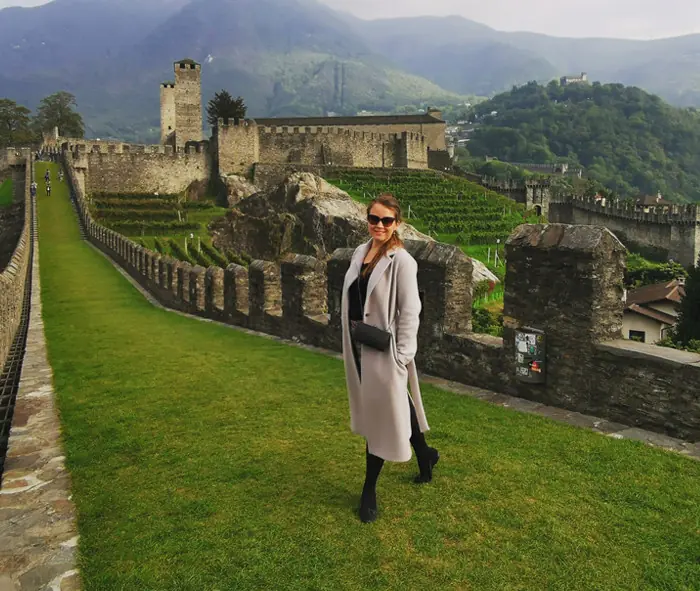

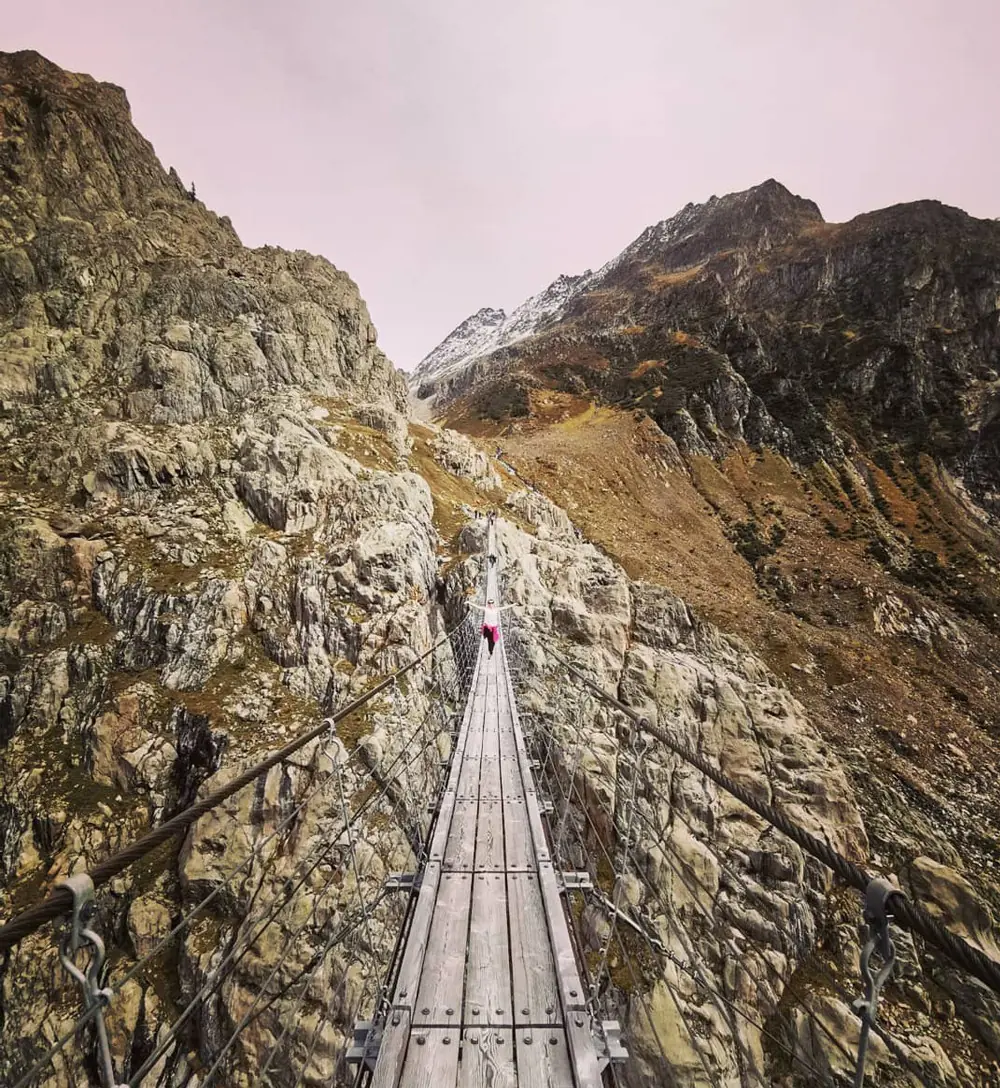
Jobs in Switzerland for Americans
US citizens are third-country nationals in Switzerland, so the same rule applies as for any non-EU passport: a Swiss employer applies for your B or L permit inside the annual quota and shows why you beat EU candidates. In practice Americans do well because so many US companies run their European or global operations from Switzerland: Google (Zurich), Microsoft, Amazon, JPMorgan and Citi (Zurich and Geneva), Biogen and Johnson & Johnson (Zug), Medtronic (Vaud), Procter & Gamble and Caterpillar (Geneva), Philip Morris (Lausanne). Intra-company transfers are the most common route, followed by direct hires in finance, pharma and tech. Two practical points: as a US citizen you keep filing US tax returns from Switzerland (the foreign earned income exclusion and the tax treaty prevent most double taxation), and some Swiss banks are reluctant to open accounts for US persons because of FATCA, so ask your employer which bank it recommends.
Swiss pay in US dollars. The Swiss median full-time wage is CHF 7,024 a month gross, or about CHF 84,300 a year (Federal Statistical Office, 2024 data). At this page’s rate of CHF 1 = about US$1.20, that is about US$101,000 a year, gross, before social deductions and tax.
Health insurance is a bill you pay yourself. Employers do not provide it. The average basic premium for an adult is CHF 465.30 a month in 2026 (about US$560). For 2027 it rises to CHF 487.60 a month, about US$7,000 a year, before your deductible (Federal Office of Public Health, 29 September 2026, in German). In the US, the average employer plan for one person cost $9,325 in 2025, but the worker paid only $1,440 of it (KFF Employer Health Benefits Survey 2025).
Social security: you pay into one system, not two. The US-Swiss social security agreement has applied since 1 August 2014. If you are hired in Switzerland, you pay Swiss contributions. If your US employer posts you to Switzerland for a set period, normally up to five years, you can stay in US Social Security instead. Years paid in Switzerland also count towards the minimum you need for a US pension. The agreement does not cover health insurance or the Swiss occupational pension (Federal Social Insurance Office).
Visiting is not working. US citizens need no visa for Switzerland or the rest of the Schengen area for stays of up to 90 days in any 180-day period (SEM, ch.ch). That stay does not let you work. Non-EU/EFTA nationals need a work permit even for short-term jobs (ch.ch).
US tax. For 2026 the foreign earned income exclusion is up to $132,900 per person (IRS). Talk to a cross-border tax adviser before you accept an offer.
Comparing Switzerland with the UK? Read our guide on how Americans can find a job in the UK.
Jobs in Switzerland for Indians
Indian professionals arrive mostly through IT, pharma, banking and engineering. The big Indian IT services firms (TCS, Infosys, Wipro, HCL, Cognizant) run Swiss delivery centres for banks and insurers and move staff on intra-company L and B permits; UBS, Julius Baer, Swiss Re, Novartis and Roche hire directly; ETH Zurich and EPFL take researchers, and PhD positions sit outside the quota. Have your degree assessed through enic-naric.net early, because employers must show your qualifications in the permit file. There is no route for unskilled jobs in Switzerland for Indian citizens: third-country permits are reserved for highly qualified workers, and the only exception is students at Swiss universities, who may work up to 15 hours a week after six months of study. Offers for “vacancies for freshers” that ask for a fee are scams.
Jobs in Switzerland for Filipinos
Filipino applicants face the same third-country quota, and most of the “Switzerland job hiring for Filipino” adverts online are agency scams: a genuine Swiss employer never charges a placement fee, and you can check any company in the federal Zefix register. The realistic routes are specialist ones. Nurses are in demand, but a Philippine nursing qualification must be recognised by the Swiss Red Cross (SRC), which requires German, French or Italian at B2 level. Engineers, accountants, IT and pharma specialists with a degree and several years of experience can be sponsored by employers who fail to find EU candidates. Hospitality, domestic and caregiving work is not open to non-EU citizens on a work permit; the only legal entry for young applicants is an au pair placement (18 to 25, up to 12 months, through an authorised agency).
Swiss work permit types explained (L, B, C, G, Ci)
Switzerland issues five main work permits: L, B, C, G and Ci. Which one you get depends on how long your job lasts, your nationality, and whether you live in Switzerland or commute across the border. For non-EU/EFTA nationals, the L and B permits are the ones counted against the 2026 quota of 8,500 permits (4,500 B + 4,000 L). The C, G and Ci permits sit outside that quota.
| Permit | Who it is for | Duration | Counts against quota? | Notes |
| L (short-term) | Workers on a fixed-term contract of under 1 year | Under 1 year, tied to the contract | Yes, for non-EU/EFTA hires (4,000 L permits in the 2026 quota) | Short-stay permit linked to one specific job. Can sometimes be extended. |
| B (residence) | Workers on a contract of over 1 year, or open-ended | First issued for 1 year; extensions can run 2 years at a time | Yes, for non-EU/EFTA hires (4,500 B permits in the 2026 quota) | Standard residence permit. Initially tied to an employer and canton for non-EU holders. |
| C (settlement) | Long-term residents seeking permanent status | Permanent, usually after 10 years of residence (5 years for citizens of the EU states that joined before 2004, EFTA states, the UK, the US and Canada) | No | No labour-market test and not tied to an employer. Free movement in the Swiss job market. |
| G (cross-border commuter) | People who live in a neighbouring country and work in Switzerland | Tied to the employment contract | No | Holder must return to their home country at least once a week. |
| Ci | Spouses and children of staff at intergovernmental organisations and foreign missions | Tied to the posting or assignment | No | Allows work without the standard quota and labour-market test. |
Switzerland and sanctions: the honest picture
Switzerland is not sanctions-free, but ordinary Russian, Belarusian and Kazakh nationals can still work there legally. The older version of this guide got this wrong, so let us be precise. Switzerland adopts the EU’s sanctions packages against Russia and Belarus, largely in full. It is not independent of them.
Here is what that actually means for you. Only people named personally on the sanctions list are barred. One rule does touch ordinary Russians and Belarusians: Swiss banks may not accept deposits over CHF 100,000 from Russian or Belarusian nationals or residents, unless they hold a residence permit from Switzerland, the EEA or the UK. Russians and Belarusians also need a Schengen visa under the ordinary rules. Kazakhstan is not sanctioned at all. As an ordinary Russian, Belarusian or Kazakh national, you apply like any other third-country citizen. That means competing under the 8,500 annual work-permit quota. You must meet the highly-qualified requirement. Your employer must also pass a labour-market test to show no Swiss or EU candidate was available.
Ukrainian citizens can apply for protection status S instead. The Federal Council has extended it to 4 March 2028. Since 1 November 2025, new applicants from seven western regions of Ukraine no longer get it. Since 20 August 2026, it is granted only to people who have met their military obligations in Ukraine. With status S you may work once the canton has been notified. After five years you can get a B permit, valid for as long as status S continues.
So the door is strict, not closed. Navigating exactly this kind of terrain is what we do every day.
Getting ready to apply for jobs in Switzerland? Check your CV for free: see it the way a recruiter does, then fix each problem.
How to search for jobs in Switzerland
While the job market in Switzerland is highly competitive and restrictions can make obtaining a work visa challenging, there are many desirable jobs for foreigners in Switzerland, and demonstrated by the fact that about a third of workers are foreign nationals. If you want to know how to find a job in Switzerland for expats, see below.
Swiss Cantons
Before you start your job search, it is a good idea to know what to expect from the different regions of Switzerland. Remember that the country has four official languages, including German, French, Italian, and Romansh, and English is also widely spoken.
German is by far the most widely spoken language in Switzerland, but Swiss German is pronounced quite different from Standard German and will take some practice.
Zurich is the largest city in Switzerland and there are many jobs in Zurich available for foreigners. The local economy is particularly strong in banking, insurance, fintech, and IT. German is the principal language.
Bern, the capital of Switzerland, speaks a mixture of German and French. This is where many government organizations and international companies are based.
French is predominantly spoken in Geneva and the strongest industries in the region are manufacturing, IT, and it is also the base of many international organizations.
The locals in Basel predominantly speak German. This is where you will find many of the big pharmaceutical and chemical companies.
Jobs for EU and EFTA Citizens
If you are a citizen of an EU or EFTA country, you can apply for job vacancies in Switzerland, and your potential employer does not need to obtain a visa for you within the work visa quota allowance.
There are several tools out there to help Europeans seeking cross-border jobs. EURES and Europass both provide job listings for European vacancies and tools to help European citizens apply across borders and manage challenges such as social security investment and health coverage.
Score your CV in 30 seconds, then fix its biggest problems one by one. Both free.
Free, no card. A free account unlocks every fix.

Skill Shortages
While the Swiss workforce is highly qualified, there are some significant skill shortages. It tends to be easier to find employment in a skills-shortage industry as a foreigner.
According to the 2025 Swiss Skills Shortage Index by the Adecco Group Switzerland and the Swiss Job Market Monitor (SMM) of the University of Zurich (November 2025), only four occupational groups still show a clear shortage of workers in Switzerland:
- Healthcare specialists, such as specialist doctors, qualified nurses and pharmacists (ranked 1st)
- Foremen, site supervisors and production managers (2nd)
- Engineers and comparable specialists (3rd)
- Electricians and electronic technicians (4th)
IT demand has cooled. Software developers fell to 9th place. Office, admin and ICT jobs that are most exposed to AI now have more candidates than vacancies.
If you have a qualification and demonstrable experience in any of these areas, you stand a relatively good chance of finding work in Switzerland.


Medical and Nursing Jobs
Doctors and other medical roles are among the highest paid jobs in Switzerland. You should be aware that if you received your medical training in another country, you will need to have your qualifications recognized in Switzerland. You can do a pre-check of your qualifications to see whether they are likely to be accepted before completing the full recognition application. For nurses and most other health professions, the Swiss Red Cross runs a free pre-check of up to four weeks. Recognition then takes up to four months and costs CHF 550 to 1,000, plus CHF 130 for registration. Doctors apply to MEBEKO at the Federal Office of Public Health instead. EU/EFTA medical diplomas take about three months, while non-EU medical diplomas generally cannot be recognised directly.
Nursing jobs are in high demand across Switzerland and an FSO analysis put the median for tertiary-trained nurses at CHF 7,429 a month, about CHF 89,100 a year (2018 data). There is also an extremely high demand for doctors, and doctors are among the best-paid employees in the country. Salaried specialists earned a median of about CHF 197,000 a year in a study for the Federal Office of Public Health (2014 data). Residents in the Canton of Zurich earn about CHF 103,000–115,000 a year in their first four years, before allowances (2026 pay scale).
You can find medical roles in Switzerland via the Swiss Medical Network and Expomedics.
Construction Workers
The FSO median for construction and other labourers is CHF 5,541 a month, about CHF 66,500 a year (2024). Skilled building trades earn more, with a median of CHF 6,172 a month (about CHF 74,100 a year). The FSO does not publish separate figures for architects or civil engineers. They belong to the science and engineering professionals group, with a median of CHF 8,730 a month (about CHF 104,800 a year).
IT and Software Development Jobs
IT jobs, especially in systems architecture, are among the highest paying jobs in Switzerland. According to the FSO wage survey, ICT professionals earn a median of CHF 9,949 a month, about CHF 119,400 a year (2024). You can keep up-to-date with the latest IT jobs in Switzerland on IT Jobs Switzerland, SwissDevJobs, and Experis Switzerland.
International Companies
If you work for an international company with offices in Switzerland, asking to be transferred to the Swiss office can be an effective route, because your employer does not have to prove that no Swiss or EU/EFTA candidate was available. The permit still counts against the annual quota. Many of these companies also do the majority of their business in English, which can be a bonus.
Some international companies with offices in Switzerland include:
| Company | Industry | Region |
| Glencore International | Commodities Trading | Baar |
| Nestlé | Food and Beverage | Vevey |
| Novartis | Pharmaceuticals | Basel |
| Zurich Insurance Group | Insurance | Zurich |
| Roche Group | Pharmaceuticals | Basel |
| Google Switzerland | Technology | Zurich |
| UBS AG | Financial Services | Zurich |
| ABB Group | Engineering | Zurich |
| Coop Group | Retail | Basel |
| Adecco Group | Staffing | Zurich |
| Swiss Re | Reinsurance | Zurich |
| Migros | Retail | Zurich |
| Holcim | Concrete | Zug |
Other international organizations with offices in Switzerland include the United Nations, World Trade Organization, World Health Organization, Red Cross, World Economic Forum, and International Olympic Committee.
More than 5,000 Google employees work in Zurich, on all of Google’s product areas (Google). If Big Tech is your target, see our guide on how to get a job at Google.
I recommend looking for a job in international companies, because they give you more chances to prove yourself and integrate.Career coach | Career in Switzerland
Jobs in Switzerland for English speakers: where English alone is enough
English-only jobs in Switzerland are real, but concentrated. They exist in pharma and life sciences R&D (Novartis, Roche and their suppliers in Basel), in tech (Google Zurich, IBM Research, ABB’s software units, the Zug crypto cluster, ETH and EPFL spin-offs), in the front and IT functions of the big banks and insurers, in commodity trading in Geneva and Zug, and in the international organisations around Geneva (UN agencies, WHO, ICRC, WTO), which run in English and French. If the job advert is written in English, the working language is English: apply in English and do not translate your CV. What English will not get you: customer-facing roles, public sector, healthcare, retail, hospitality and most SME jobs outside the big cities, where Swiss German or French at B2 is a hard requirement. A common plan is to land the first role in an English-first employer and reach B1 in the local language within the first year, which opens the internal moves.
Where to search for job opportunities in Switzerland
Job Search Websites
You can find jobs in Switzerland on a number of websites, many of which publish job vacancies in Switzerland for foreigners and in English. The websites below usually have the biggest amount of job opportunities in Switzerland:
- Jobs.ch – general
- Jobagent – general
- JobisJob.ch – general
- JobScout24 – general
- JobsinZurich – English speaking jobs
- 100000jobs – general
- AdeccoITJobs – IT jobs
- Glassdoor – English speaking jobs
- It-jobs-switzerland – IT jobs
- SeasonWorkers – seasonal work
- SwissDevJobs – IT jobs
- Teachaway – teaching
- TES.com – teaching
- TotalJobs – general
Recruitment Agencies
There are many recruitment agencies and private employment services active in Switzerland. Among the biggest agencies active in the country are ManPower, Adecco, and Swisslinx. For jobs in the finance industry you may want to contact Robert Walters, Alpha for management positions, and Diversity for medical and pharmaceutical roles.
Public Employment Services
If you are a foreign resident in Switzerland, you can take advantage of Work.Swiss, the public employment service. Not only does it provide job listings, but resources that can help with searching and applying for jobs, and information about visas, the local job market, and your rights as an employee.
Remote work opportunities in Switzerland
Remote jobs become increasingly popular in Switzerland and you do not need to be physically in a location to work for a company remotely. However, if you wish to be based in Switzerland, your employer must still show that no suitable Swiss or EU/EFTA candidate was available and sponsor your work permit within the quota system.
You may also wish to live in Switzerland while working remotely for a company elsewhere in the world. This type of work will not qualify you for a work visa in Switzerland, and the country does not currently offer a digital nomad visa to enable remote workers to live in Switzerland.
For more on working remotely in Switzerland, visit this page.
If you are wealthy and do not plan to work, some cantons grant residence under lump-sum taxation. This is not a “golden visa”, and Switzerland has no investor visa. You pay an annual tax based on your living costs, with a federal minimum tax base of CHF 435,000 a year. You are not allowed to do paid work in Switzerland under this scheme. Non-EU/EFTA applicants also need the canton to confirm a significant tax interest.
Do I need health insurance in Switzerland? Yes, and what it costs in 2026
Every resident must buy basic health insurance, whatever your nationality. The scheme is called KVG in German and LAMal in French. You have three months from the day you arrive to sign up, and your cover then backdates to your arrival date. There is no employer or state plan to fall back on. You pick a private insurer and pay the premium yourself.
In 2026 the average basic premium for adults (26 and over) is CHF 465.30 per month (about US$560). It varies a lot by canton, from roughly CHF 312 in Zug to CHF 586 in Geneva. You also choose an annual deductible between CHF 300 and CHF 2,500. A higher deductible lowers your monthly premium. Basic cover excludes routine dental care, so budget for that separately. On 29 September 2026 the Federal Office of Public Health announced that the average adult premium for 2027 will be CHF 487.60 a month (FOPH press release, in German).
One thing to plan for: this premium sits on top of the social deductions already taken from your salary. It is a separate monthly bill, not a payroll line.
Cost of living in Switzerland: how much you need to earn
Official statistics do not define a comfortable salary. They do show what people pay and earn. The table below uses FSO rent data and the FSO household budget survey. Swiss wages are among the highest in the world. So is the cost of living. What matters is your take-home pay after rent, mandatory health insurance and tax, not the headline salary.
| Cost or income (official data) | Typical amount |
| Zurich city, one-bed (2-room) flat, lease under 2 years | ~CHF 1,840/mo average rent, excluding charges (FSO, 2024) |
| Geneva city, one-bed (2-room) flat, lease under 2 years | ~CHF 1,450/mo average rent, excluding charges (FSO, 2024) |
| Single person under 65, consumer spending | ~CHF 3,350/mo, excluding tax, social insurance and health premiums (FSO, 2020–21) |
| Single person under 65, gross income | ~CHF 6,780/mo on average (FSO, 2020–21) |
| Couple with two children, gross household income | ~CHF 173,000/yr on average (FSO, 2020–21) |
Tie these figures back to your net pay. The national median wage is CHF 7,024/mo gross, which is roughly CHF 5,970/mo net after social deductions and before income tax. That covers a single-person budget in most cantons with room to spare. Couples with two children had an average gross household income of about CHF 173,000 a year in 2020–21. That is an average, not a minimum budget.
Top tips for applying for a job in Switzerland
Searching for a job in Switzerland is much the same as searching for work elsewhere in the world. You need to cast your net wide when looking for opportunities, look for how you can ensure you have the qualifications and experience needed, tailor your application for each vacancy, and be patient with what can be a lengthy process.
But every job market does have its unique aspects. Consider the tips below to adapt to the Swiss job market.
- Include a photo in your CV. While this is not common practice in the United States and the United Kingdom, it is a very common feature of resumes in some European countries, including Switzerland.
- Include personal details such as your marital and visa status in your application. Also be prepared to be asked personal questions such as whether you have children or your gender. While some countries discourage these kinds of personal questions, they are common in Switzerland.
- Submit your resume and application letter in the language that the job is advertised in. If in doubt, or you are proactively contacting employers, submit your information in English in the first instance.
- Have your foreign education qualifications recognized in Switzerland using enic-naric.net.
- Share which languages you speak. Speaking the national language for the region in which the job is located and/or English is usually a minimum requirement. Swiss companies tend to value multilingualism, and proficiency in Russian and Mandarin are also considered attractive skills.
- Be prepared for multiple interview rounds. It is not unusual for Swiss companies to administer aptitude tests while selecting candidates, and to schedule telephone or video interviews before proceeding to in-person interviews. It is also not uncommon for Swiss interviewers to deliberately create tense situations during the interview to see how you handle yourself under stress.
Know your strengths and the value that you can offer a company before applying for a job and going into an interview so that you can confidently and honestly explain why you are the best fit for the role.
Trabajos en Suiza, İsviçre iş imkanları, kerja di Swiss, العمل في سويسرا: short summaries in four languages
Trabajos en Suiza para extranjeros (resumen en español). Los ciudadanos de la UE/AELC pueden trabajar en Suiza sin cuota. Los latinoamericanos (peruanos, colombianos, venezolanos y otros) necesitan una oferta de un empleador suizo que solicite el permiso dentro de la cuota anual de 8.500 permisos para terceros países, reservada a perfiles cualificados. El salario mediano es de CHF 7.024 brutos al mes. El inglés basta en farmacéuticas, tecnología y organizaciones internacionales; el alemán o el francés amplían mucho las opciones. Busque en jobs.ch, LinkedIn y las webs de las empresas, y nunca pague a intermediarios por una oferta.
İsviçre’de iş imkanları (Türkçe özet). AB/EFTA vatandaşı olmayan Türk vatandaşları için İsviçre’de çalışmanın tek yolu, sizi işe almak isteyen bir İsviçreli işverenin yıllık 8.500 kişilik üçüncü ülke kotasından çalışma izni başvurusu yapmasıdır; bu izinler yalnızca nitelikli uzmanlara verilir. Medyan maaş brüt CHF 7.024/ay; ülke genelinde asgari ücret yoktur; beş kanton kendi asgari ücretini belirler, en yükseği Cenevre’de saatte CHF 24,59’dur. İlaç, finans, BT ve mühendislikte İngilizce çoğu zaman yeterlidir; Almanca veya Fransızca seçenekleri genişletir. İlanlar için jobs.ch, LinkedIn ve şirket sitelerini kullanın; iş vaadiyle para isteyen aracılara ödeme yapmayın.
Cara kerja di Swiss (ringkasan bahasa Indonesia). Warga negara di luar UE/EFTA, termasuk WNI, hanya bisa bekerja di Swiss jika perusahaan Swiss mengajukan izin kerja dari kuota tahunan 8.500 izin untuk tenaga ahli berkualifikasi tinggi; tidak ada jalur untuk pekerjaan tanpa keahlian. Gaji median CHF 7.024 per bulan (kotor). Bahasa Inggris cukup di sektor farmasi, teknologi, dan organisasi internasional; bahasa Jerman atau Prancis membuka lebih banyak peluang. Cari lowongan di jobs.ch, LinkedIn, dan situs perusahaan, dan jangan pernah membayar agen untuk jaminan pekerjaan.
العمل في سويسرا للأجانب (ملخص بالعربية). لا يمكن لمواطني الدول من خارج الاتحاد الأوروبي/الإفتا العمل في سويسرا إلا إذا تقدّم صاحب عمل سويسري بطلب تصريح عمل من الحصة السنوية البالغة 8,500 تصريح، وهي مخصصة للكفاءات المؤهلة فقط. الراتب الوسيط 7,024 فرنكاً سويسرياً شهرياً قبل الضرائب، ولا يوجد حد أدنى اتحادي للأجور، لكن خمسة كانتونات تحدد حداً أدنى خاصاً بها، أعلاها في جنيف (24.59 فرنك للساعة). تكفي الإنجليزية في قطاعات الأدوية والتقنية والمنظمات الدولية، والألمانية أو الفرنسية توسّعان الخيارات. ابحث عن الوظائف عبر jobs.ch وLinkedIn ومواقع الشركات، ولا تدفع أبداً لوسطاء مقابل وعد بوظيفة.
Summary and FAQs on how to secure a job in Switzerland
While Switzerland may have one of the more competitive job markets, the rewards are well worth effort. Swiss workers enjoy high salaries, excellent benefits, and a good work-life balance. The jobs on offer tend to be for highly skilled workers and highly rewarding.
Because it is such a tight market, when looking for a job in Switzerland it is important to stand out from the crowd and ensure that you match your skill and experience to the career that you want.
While you may be an expert in your industry, most people aren’t experts when it comes to applying for jobs. Start with your CV. Use our free CV check to see it the way a Swiss recruiter does, then fix each problem before you apply.
See what a recruiter sees, then fix it before you apply. An instant score, then the fix for every problem.
Free, no card. A free account unlocks every fix.