 By Andre Atallah, CEO of EP Advisory
Many employers, especially larger and international ones, add a test before or after the interview. For a lot of candidates this is the most nerve-wracking stage, because it feels less controllable than a conversation. It is not. These tests reward preparation more than almost anything else in hiring.
This guide explains the main types, how to prepare, and how to keep your head on the day.
What these tests measure
Aptitude and psychometric tests give employers a consistent, comparable way to assess candidates. They are not trying to trick you. They measure how you reason and work under time pressure, and, in the case of personality tests, how you might fit the team.
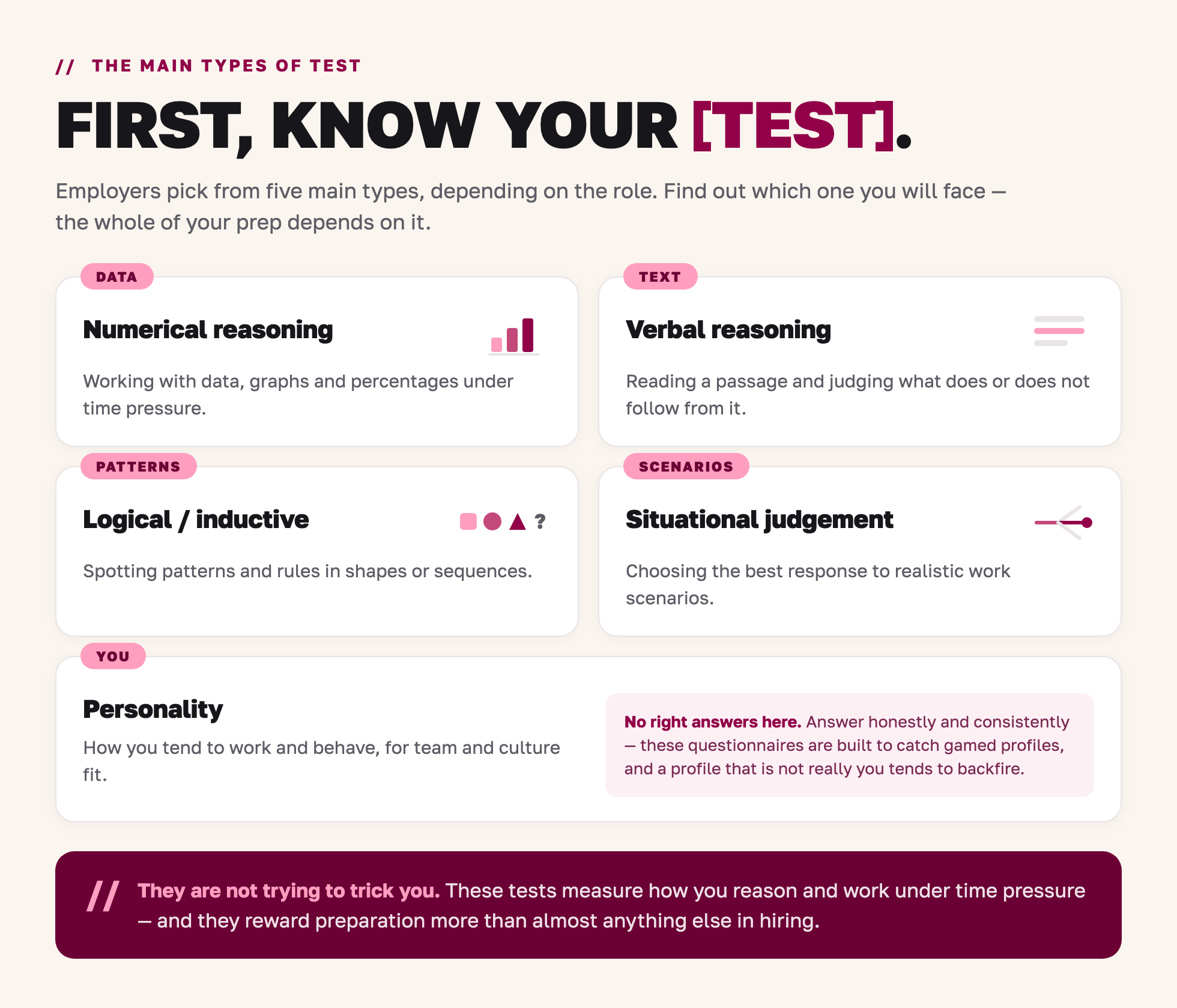
The main types of test
| Test type | What it measures |
|---|---|
| Numerical reasoning | Working with data, graphs, and percentages under time pressure. |
| Verbal reasoning | Reading a passage and judging what does or does not follow from it. |
| Logical / inductive | Spotting patterns and rules in shapes or sequences. |
| Situational judgement | Choosing the best response to realistic work scenarios. |
| Personality | How you tend to work and behave, for team and culture fit. |
Staying calm under time pressure
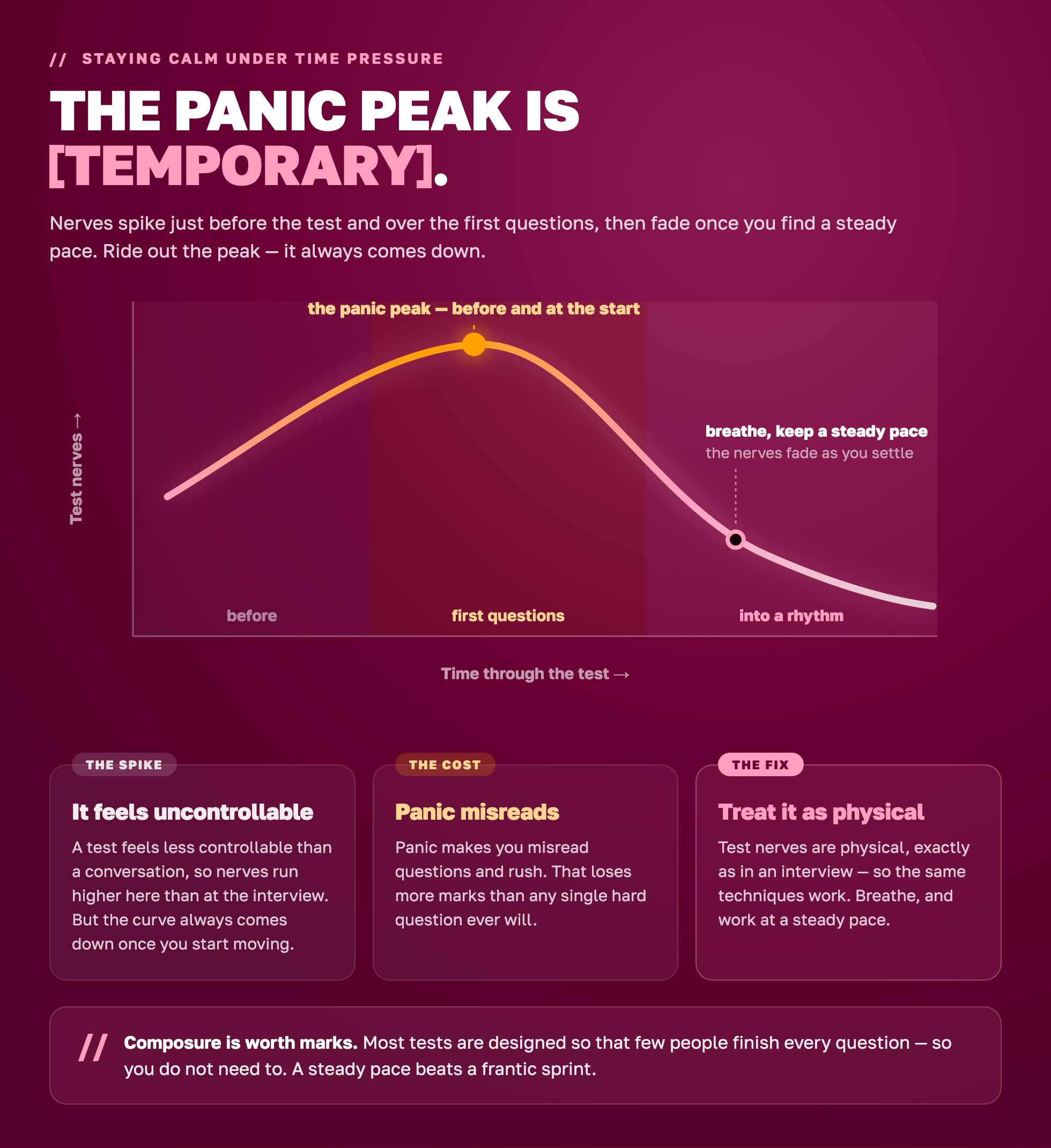
Composure is worth marks. Panic makes you misread questions and rush. Nerves in a test are physical, exactly as in an interview, so treat them the same way: breathe, work at a steady pace, and remember that most tests are designed so that few people finish every question, so you do not need to.
If nerves are the real obstacle for you, the techniques in our guide on calming interview nerves work just as well before a test.
On the day
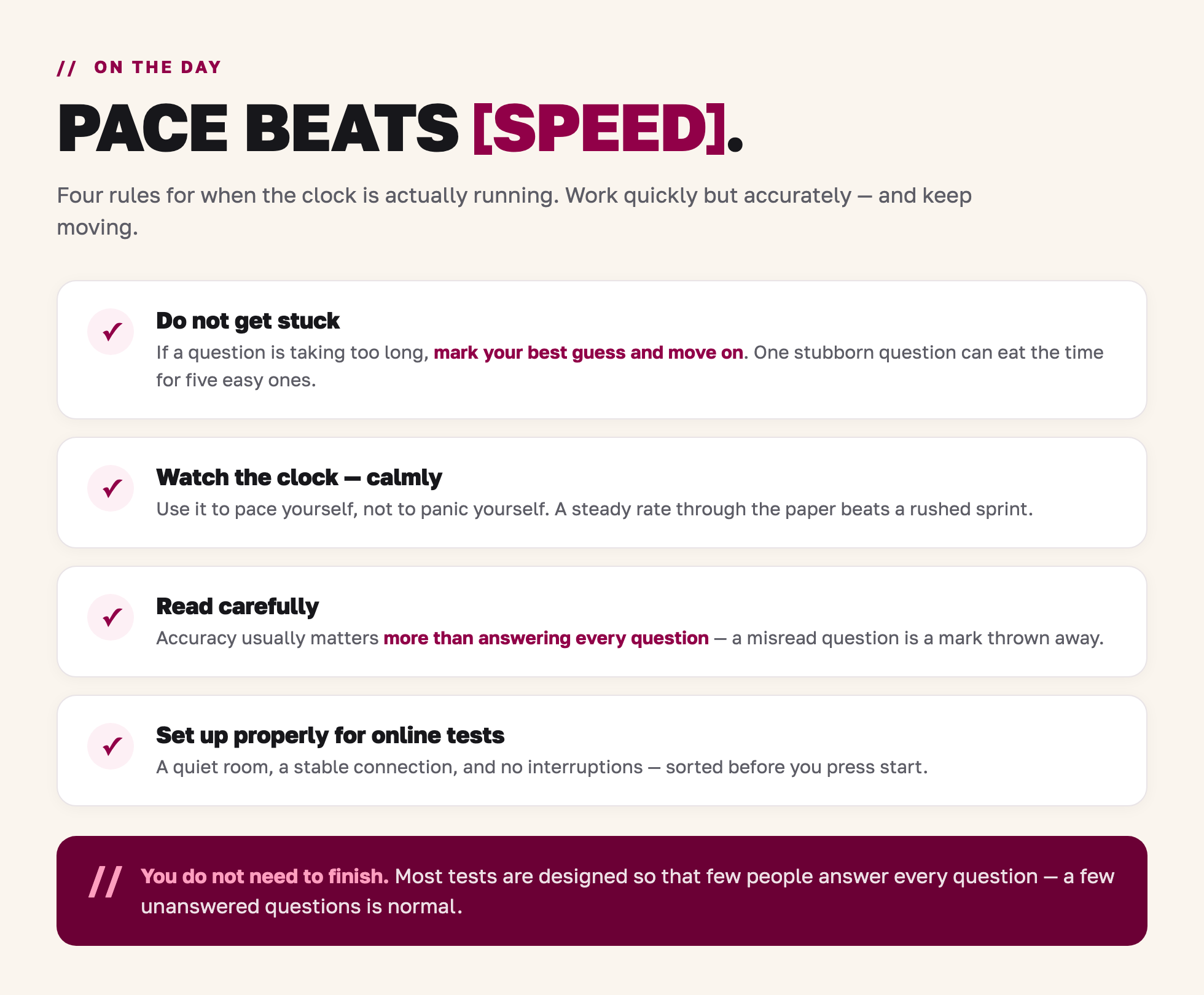
- Do not get stuck. If a question is taking too long, mark your best guess and move on.
- Watch the clock, but do not let it panic you. Pace beats speed.
- Accuracy usually matters more than answering every question, so read carefully.
- Set up properly for online tests: a quiet room, a stable connection, and no interruptions.
Personality tests: be honest
Do not try to game a personality test. They are built to catch inconsistency, and a profile that does not match how you really are tends to backfire, both in the process and in a job that would not suit you. Answer honestly and consistently, and trust that the right fit is what you actually want.
Your test-prep sequence
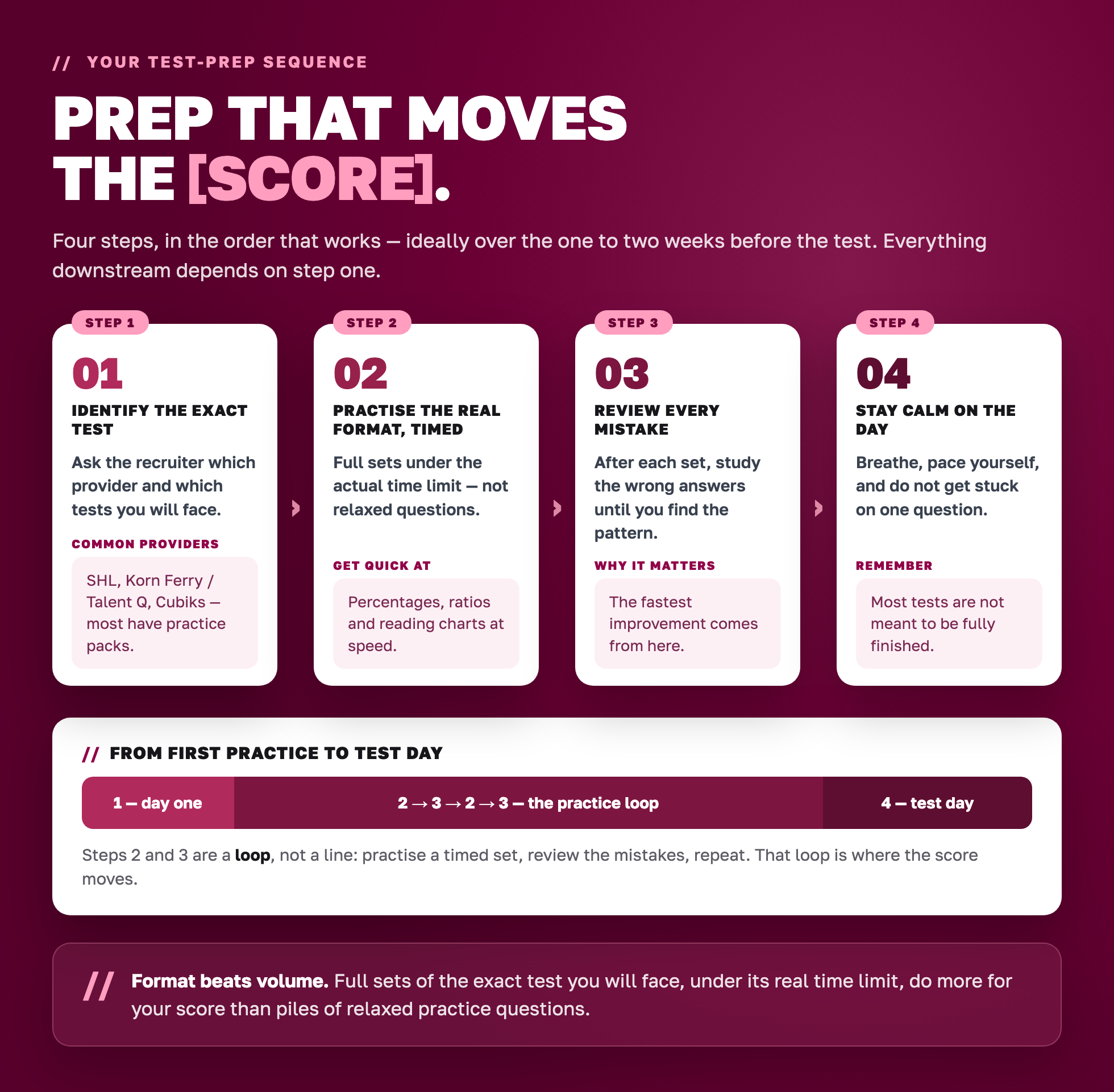
Work through these in order, ideally over one to two weeks before the test.
- Step 1: identify the exact test. Ask the recruiter which provider and which tests you will face. Common providers include SHL, Korn Ferry or Talent Q, and Cubiks, and most have practice packs you can work through. Everything else depends on this.
- Step 2: practise the real format, timed. Do full sets under the actual time limit, not relaxed questions, because the right format matters more than sheer volume. Get the basics quick too: for numerical tests, that means percentages, ratios, and reading charts at speed.
- Step 3: review every mistake. After each set, study the wrong answers to find the pattern. This is where the fastest improvement comes from.
- Step 4: on the day, stay calm and pace yourself. Breathe, do not get stuck on any one question, and remember most tests are not meant to be fully finished.
Summary and FAQs on aptitude and psychometric tests
Tests are the most improvable part of hiring. Find out the exact format, practise it under real time pressure, and stay calm on the day. Do that, and the stage that scares most candidates becomes one where you quietly pull ahead.
Preparing for a full process abroad? Our consultants can point you to the right practice and prep. Use the free consultant picker tool, or read the full guide to passing a job interview abroad.