 By Andre Atallah, CEO of EP Advisory
Most people accept the first number they are offered, because asking feels uncomfortable. But the discomfort is the only real barrier. Employers expect a conversation about pay, and the number is far more flexible than the job ad suggests, once the right conditions are in place.
This is where our approach differs from the usual advice. Most guides teach you to anchor high and give a range. Useful, but secondary. The real lever is desire and power.
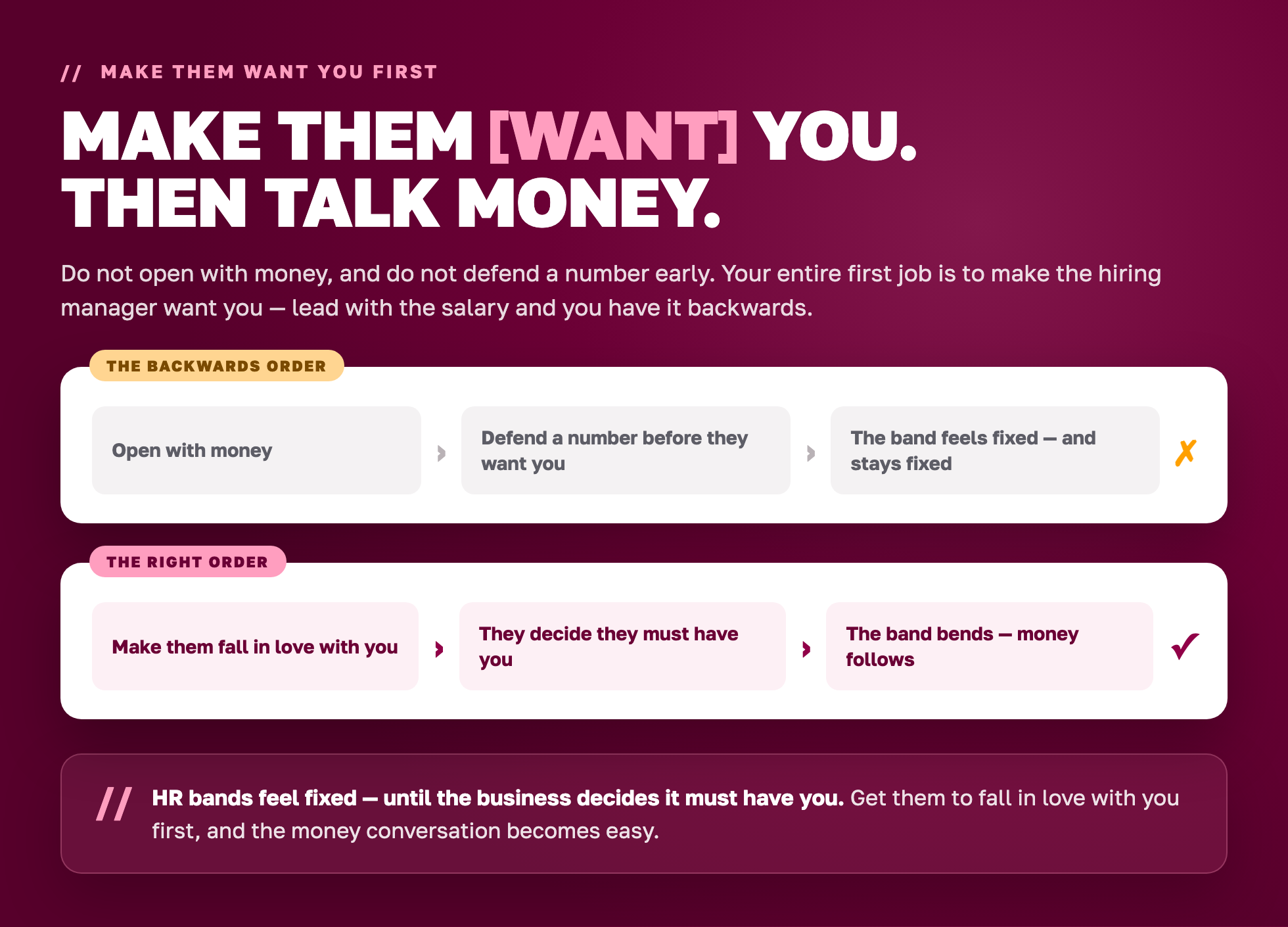
Make them want you first
Do not open with money, and do not defend a number early. Your entire first job is to make the hiring manager want you. HR bands feel fixed, but they bend for a person the business has already decided it must have. Get them to fall in love with you, and the money conversation becomes easy. Lead with the salary and you have it backwards.
Power sets the salary, not the range
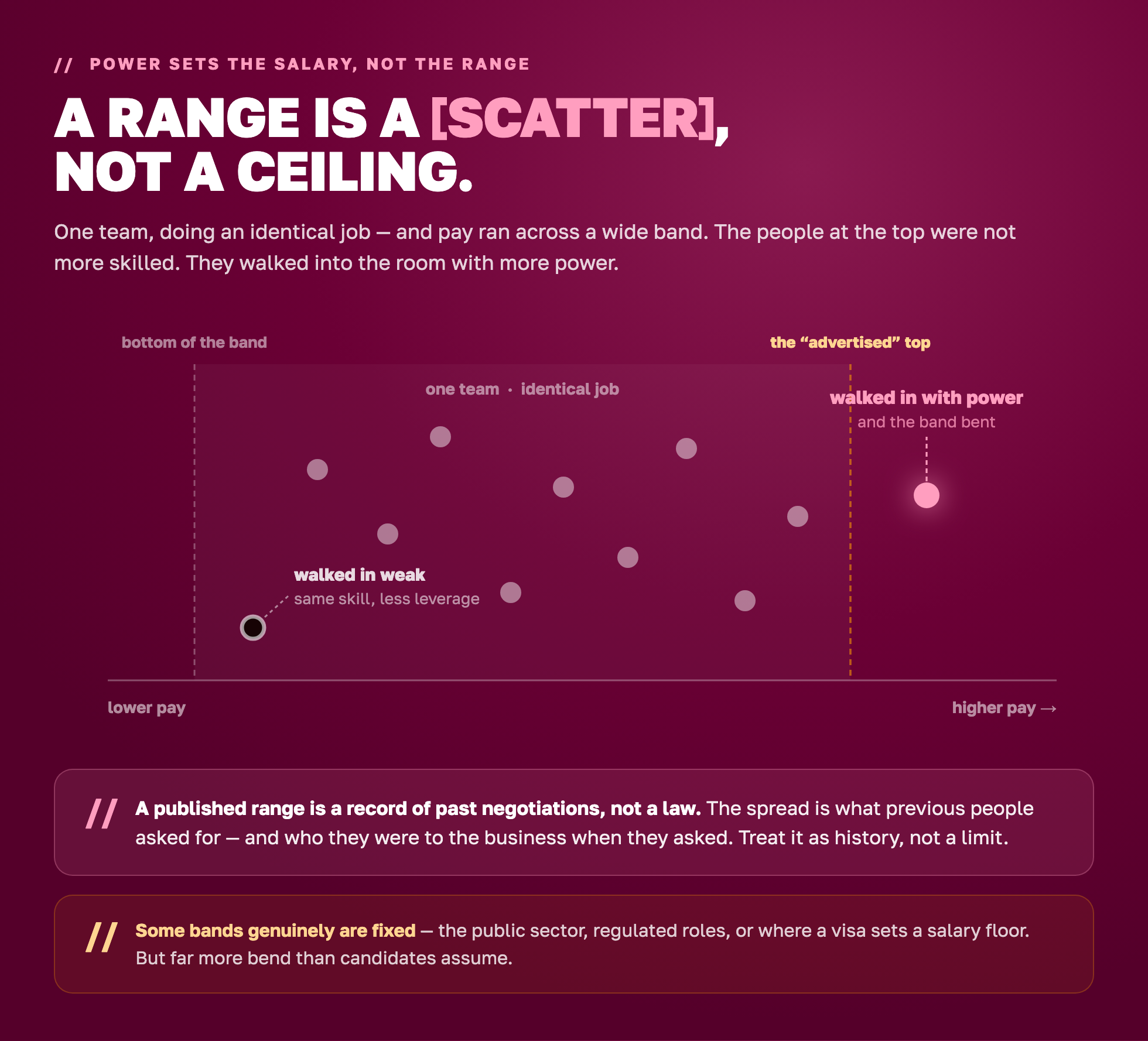
Here is the insight that changes how you see the whole thing. In one team doing an identical job, pay ran across a wide band. The people at the top and the people at the bottom were not more or less skilled. The difference was who walked in with more power and who walked in weak.
This suggests a published range is often less of a ceiling than it looks, and more a record of past negotiations. Some bands are genuinely fixed, in the public sector, regulated roles, or where a visa sets a salary floor. But far more bend than candidates assume. Which leads to the next rule.
Nothing is fixed once they want you
Do not walk in having already decided the offer will be too low, the title is set, or the arrangement cannot change. That negative prejudgment leaks into your energy and kills the room before you have started. Level, title, working pattern, and pay can all move for the right person. Go in with an open mind, because closing your own mind first is how you talk yourself out of money that was there for the taking.
Do your homework, then hold your nerve

Confidence in the conversation comes from knowing the number. Before you talk money, research the market rate for this role, this level, and this location, and factor in the local cost of living rather than the headline figure. Know your own floor, the number below which you walk away. For a move abroad, public salary data for the specific country and city gives you real local figures to anchor on.
When it is time, state a researched range and then stop talking. Let the silence do the work. The homework is what lets you say the number calmly instead of hopefully. And if you are pushed for a number early, before they are sold on you, deflect politely: say you would rather understand the role fully first, and you are happy to talk numbers once you both know it is a fit.
The counter-offer tells you the truth
Here is a pattern worth remembering. When someone resigns, a budget that supposedly did not exist often appears overnight as a counter-offer. That proves the money was available all along; it just took leverage to surface it. Treat a weak counter for what it is, a signal of the real value you already hold, and be willing to walk if it insults that value.
One caution: a counter-offer from your current employer proves the money exists, but accepting one is often a trap, because you have shown you were ready to leave. Treat it as proof of your value elsewhere, not as a reason to stay.
Negotiate the whole package
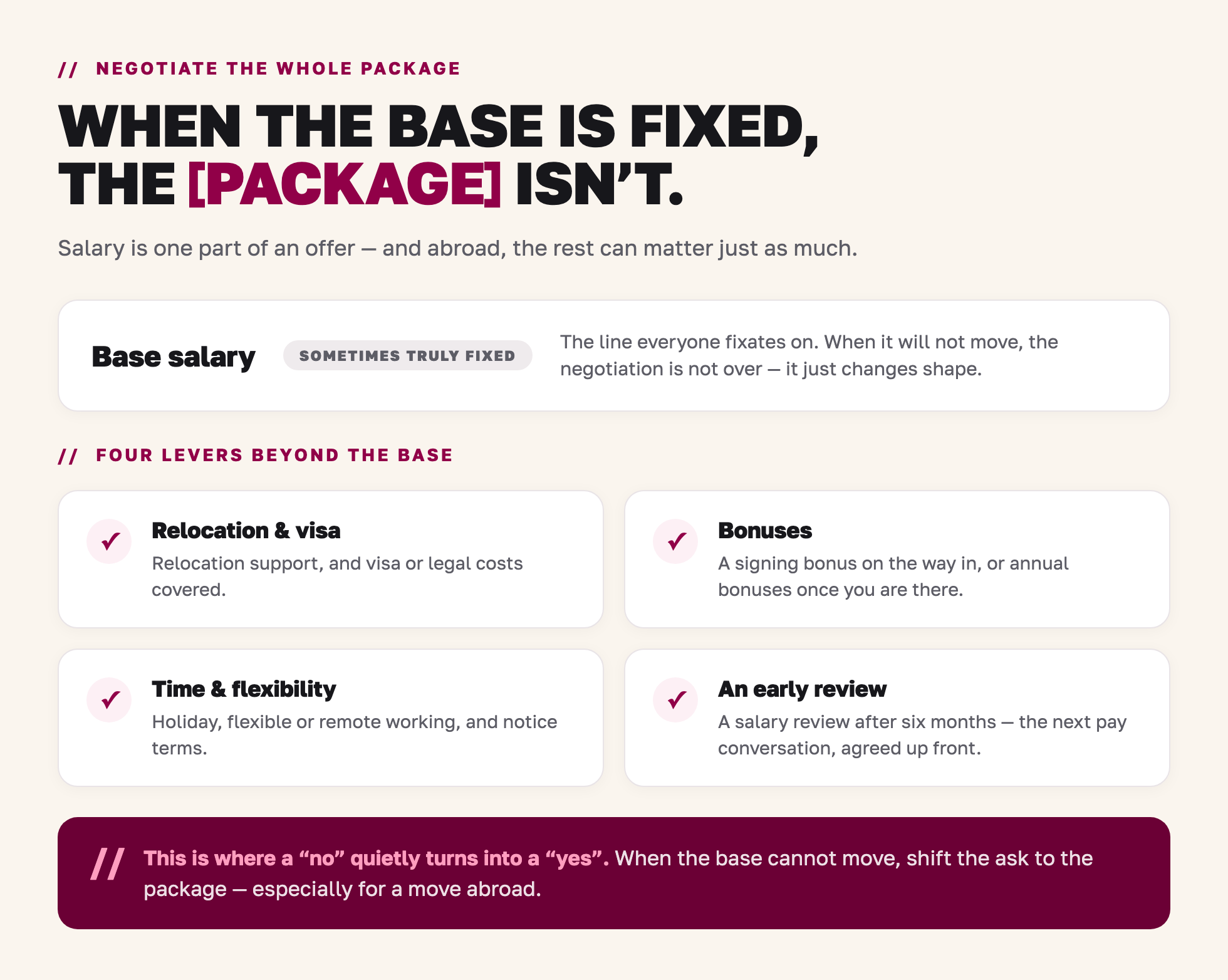
Salary is one part of an offer, and abroad the rest can matter just as much:
- Relocation support and visa or legal costs.
- Signing or annual bonuses.
- Holiday, flexible or remote working, and notice terms.
- A salary review after six months.
When the base is fixed, these are often where a “no” quietly turns into a “yes.”
Do not stop at the offer: set up the next raise
This is the step almost everyone misses. The first happy year in a new job evaporates, and if you did not set anything up, nothing happens. So in month one, tell your manager you want to be in a position to target a raise or promotion in twelve months, and ask to sketch out together what high performance looks like. Now you have a plan and a shared definition of success, instead of hoping to be noticed.
Managing the nerves
The nerve to ask is the whole game. Preparation lowers the fear, because a researched number is far easier to say than a hopeful one. Rehearse the ask until it sounds natural, and breathe before you say it. The same techniques in our guide on calming interview nerves apply here too.
The salary timeline: what to do and when
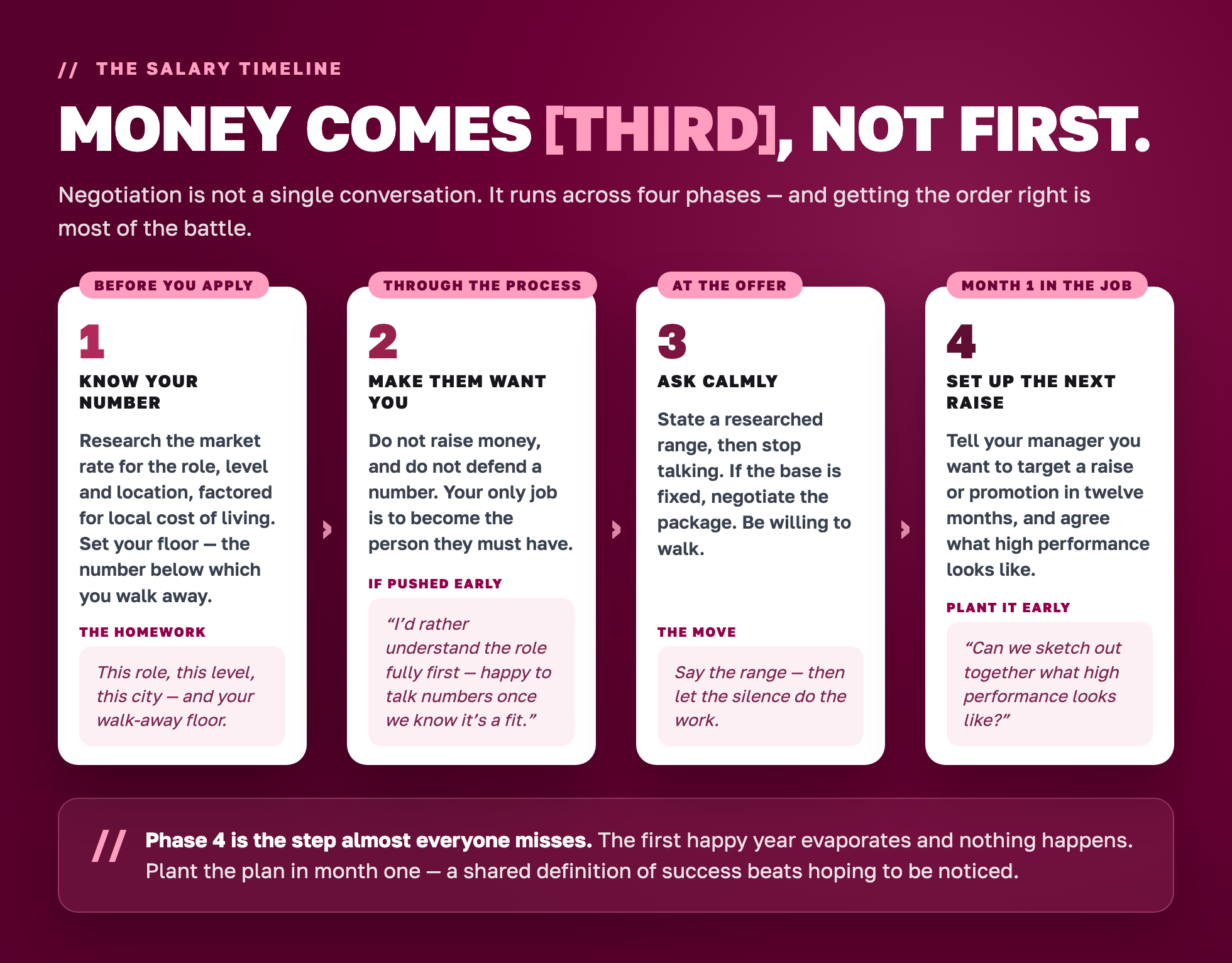
Negotiation is not a single conversation. It runs across four phases, and getting the order right is most of the battle.
- Before you apply: know your number. Research the market rate for the role, level, and location, factor in local cost of living, and set your floor, the figure below which you walk away.
- Through the process: make them want you. Do not raise money, and do not defend a number. Your only job here is to become the person they have decided they must have.
- At the offer: ask calmly. State a researched range, then go quiet and let them respond. If the base is fixed, negotiate the package, relocation, bonus, review date. Be willing to walk if a counter insults your real value.
- Month 1 of the new job: set up the next raise. Tell your manager you want to be positioned for a raise or promotion in twelve months, and agree together what high performance looks like. Plant it early, before the year quietly slips by.
Summary and FAQs on negotiating salary
Make them want you, keep an open mind, and let the number follow the desire. Ranges are not ceilings, prejudgment is your enemy, and the money often only surfaces under leverage. Then negotiate the whole package, and set up your next raise before your first month is over.
Want a second opinion on your number before you ask, especially for a role abroad? Our consultants know the local markets. Use the free consultant picker tool, or start with how to pass a job interview abroad.