 By Andre Atallah, CEO of EP Advisory
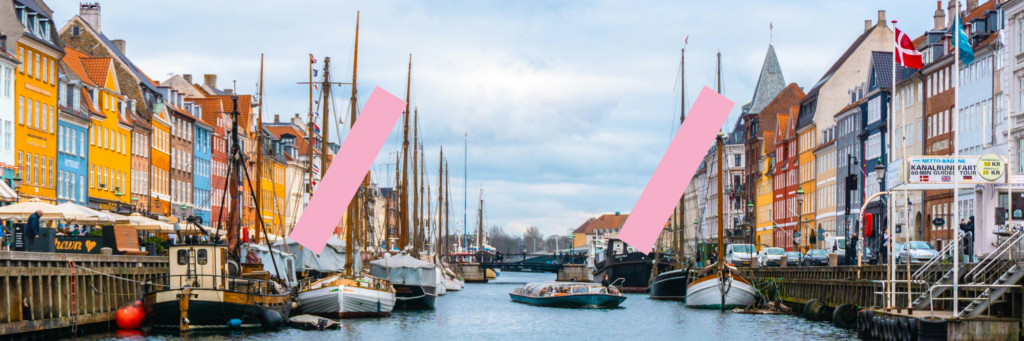
Denmark offers some of the highest salaries in Europe and a strong work-life balance. In 2025, average monthly pay was about DKK 52,850 (around €7,070) before tax, including pension. Gross unemployment was 3.1% in July 2026, and Danes consistently rank among the happiest people on earth. In nearly 10 years, we have helped more than 5,000 clients relocate to Europe, including Scandinavia. In this article, we cover all the ways to move to Denmark and share practical job search advice tailored to the Danish market. Want to know if your CV is ready for Denmark? Check your CV for free: a score in 30 seconds, then a fix for each problem.
Advantages of Moving to Denmark
Here are some more reasons why Denmark stands out.
- Denmark offers one of the best work-life balances in the world. Long working hours are not the norm.
- The country actively seeks highly qualified professionals, and the shortage occupation lists include roles such as software developers, IT architects, engineers, doctors and nurses.
- The standard of living in Denmark is among the highest not only in Europe but worldwide.
- The Danish government is entrepreneur-friendly and highly interested in innovative startups.
- Transparent tax, legal, and judicial systems, minimal bureaucracy, and virtually no corruption.
- Danish universities offer high-quality education based on modern teaching methods, along with numerous scholarship programmes for international students.
- Most Danes speak very good English, and many international companies work in English.
- Denmark has one of the best social welfare systems in the world.
Downsides of Living in Denmark
- Integration challenges. Danes are polite and friendly, but tend to keep their distance. Most Danish friendships are formed in childhood. Full integration also requires learning the Danish language over time.
- Cultural life. If you’re used to living in a bustling metropolis, Denmark may feel quiet. Entertainment options lean towards nature outings, barbecues with friends, and pétanque rather than escape rooms and nightlife.
- Climate. The weather is often overcast and rainy, and winter days are short and dark.

Scandinavia offers an excellent social safety net, including unemployment benefits that give you breathing room while searching for a job.At the same time, this raises the bar for the quality of your applications, especially at large corporations. Since everyone has time to job search, your competitors will be submitting carefully tailored CVs and personalised cover letters for every position.
George PayCareer consultant | Careers in Scandinavia.
Studying in Denmark
Studying is a great way to get to know the country, find a job locally, and ease into relocation. Bachelor’s programmes in Denmark are typically in Danish, but there are many master’s programmes taught in English.
The golden rule for students in Denmark who want to stay: combine work with studies. Danes can’t imagine doing it any other way. Many Danish companies even have a dedicated “student assistant” role.
Working while studying is also important because it gives you the opportunity to network and eventually find full-time employment.
Salaries in Denmark 2026: What Professionals Earn
In 2025, the average salary in Denmark was about DKK 52,850 per month (around €7,070) before tax, including pension contributions. The median was about DKK 48,100. This is one of the highest in Europe.
Salaries vary by industry and experience. In 2025, average monthly pay was about DKK 69,400 (around €9,300) for software developers, DKK 70,300 (around €9,400) for engineers and DKK 51,800 (around €6,900) for nurses.
Keep in mind that taxes in Denmark are high, with a top marginal rate of about 60% including the 8% labour market contribution. However, in return you get free healthcare, education, and a strong social safety net.
Work Visa for Denmark 2026: Main Schemes
Denmark offers three main programmes for work visa immigration.
1. Pay Limit Scheme
This scheme is open to everyone, regardless of profession. The main requirement is a minimum salary of DKK 552,000 per year (approximately €73,800) in 2026. No proof of education or work experience is required. More details
There is also a Supplementary Pay Limit Scheme, introduced in 2023. In 2026, its threshold is DKK 446,000 per year (about €59,700). The job must be advertised on Jobnet and EURES for at least two weeks. The scheme stays open while gross unemployment is 3.75% or less (3.1% in July 2026). More details
2. Positive List (Shortage Occupation List)
If your profession is on the shortage occupation list, you can obtain a work visa even with a salary below the Pay Limit. From 1 July 2026, the list for higher education has 164 job titles and the list for skilled work has 63. They include software developers, IT architects, engineers, doctors and nurses.
3. Fast-track Scheme
This scheme is for those hired by a certified Danish company. The company must be certified by SIRI (the Danish Agency for International Recruitment and Integration). About 995 companies are certified. SIRI normally decides these cases within 1 month.
Work Visa Processing Times
SIRI’s normal processing time is 1 month for the Pay Limit Scheme and the Positive List for higher education. It is 2 months for the Supplementary Pay Limit Scheme and 3 months for the Positive List for skilled work. The fee is DKK 6,810.
The visa is initially issued for the duration of the employment contract, up to a maximum of 4 years. After that, you can extend it. Permanent residence normally needs 8 years of legal residence, or 4 years if you meet extra conditions.
How to Find a Job in Denmark in 2026
When searching for a job in Denmark, it’s important to understand the Danish hiring culture.
LinkedIn, The Primary Tool
LinkedIn is the main platform for job searching in Scandinavia. Recruiters actively use it to find candidates. Make sure your profile is complete, in English, and highlights the key skills for your industry.
Job Boards in Denmark
The main job search platforms:
- Jobindex.dk: Denmark’s largest job board
- LinkedIn Jobs: international and local vacancies
- WorkinDenmark.dk: official portal for international professionals
- Jobnet.dk: the public job portal
Application Culture
In Denmark, quality matters more than quantity when it comes to applications. Danes carefully prepare each one: tailoring their CV to every vacancy and writing personalised cover letters.
Personal qualities are equally important. Danish employers pay close attention to soft skills: teamwork, communication, and adaptability.
Score your CV in 30 seconds, then fix its biggest problems one by one. Both free.
Free, no card. A free account unlocks every fix.

Remote Work for Danish Companies
Working remotely for Danish companies is a good way to start your career in Denmark without relocating immediately. It allows you to build your network and prove yourself as a professional.
However, it’s important to understand: remote work does not qualify you for a work visa. To relocate, you need an in-office job offer in Denmark.
Many of our clients started with remote positions and later transitioned to on-site roles and relocated to Denmark.
Startup Visa for Denmark
Denmark actively supports startups and entrepreneurs. If you have an innovative business idea, you can apply for a Startup Denmark visa.
Requirements:
- An innovative business idea with scaling potential
- Approval from an expert panel (Danish Business Authority)
- Sufficient funds for living expenses
The visa is issued for 2 years with the option to extend.
Frequently Asked Questions About Moving to Denmark

Key Takeaways About Moving to Denmark
- Denmark welcomes foreign professionals and has clear visa routes for startup founders and experienced employees. Gross unemployment was 3.1% in July 2026.
- Three main government programmes for relocation: Fast-track Scheme, Pay Limit Scheme (minimum DKK 552,000 per year in 2026), and the Positive List.
- In 2025, the average salary in Denmark was about €7,070 a month before tax. Software developers averaged about €9,300.
- Denmark is easy to adapt to, but harder to truly integrate into. Most Danes speak English, which reduces motivation to learn Danish, but knowing it is essential for long-term integration.
- When applying to Danish companies, personal qualities matter just as much as professional skills.
- If you’re studying in Denmark, it’s essential to combine work with your studies.
- Remote work for Danish companies is great for networking, but won’t lead to a visa.
See what a recruiter sees, then fix it before you apply. An instant score, then the fix for every problem.
Free, no card. A free account unlocks every fix.