 By Andre Atallah, CEO of EP Advisory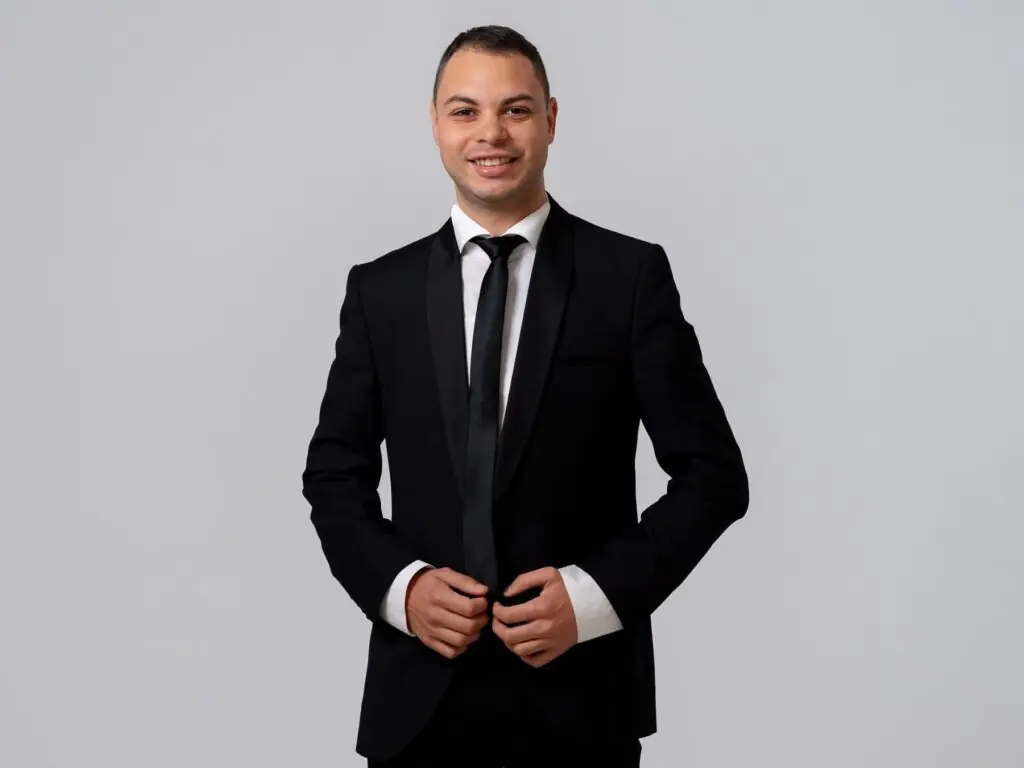
First impressions form in seconds, and people read far more than your clothes. They read your face, your posture, and whether you seem comfortable in your own skin. So dress well enough that nothing distracts, then focus your energy on how you actually come across.
This guide covers both: the clothing basics, and the presentation details we coach that make the bigger difference.
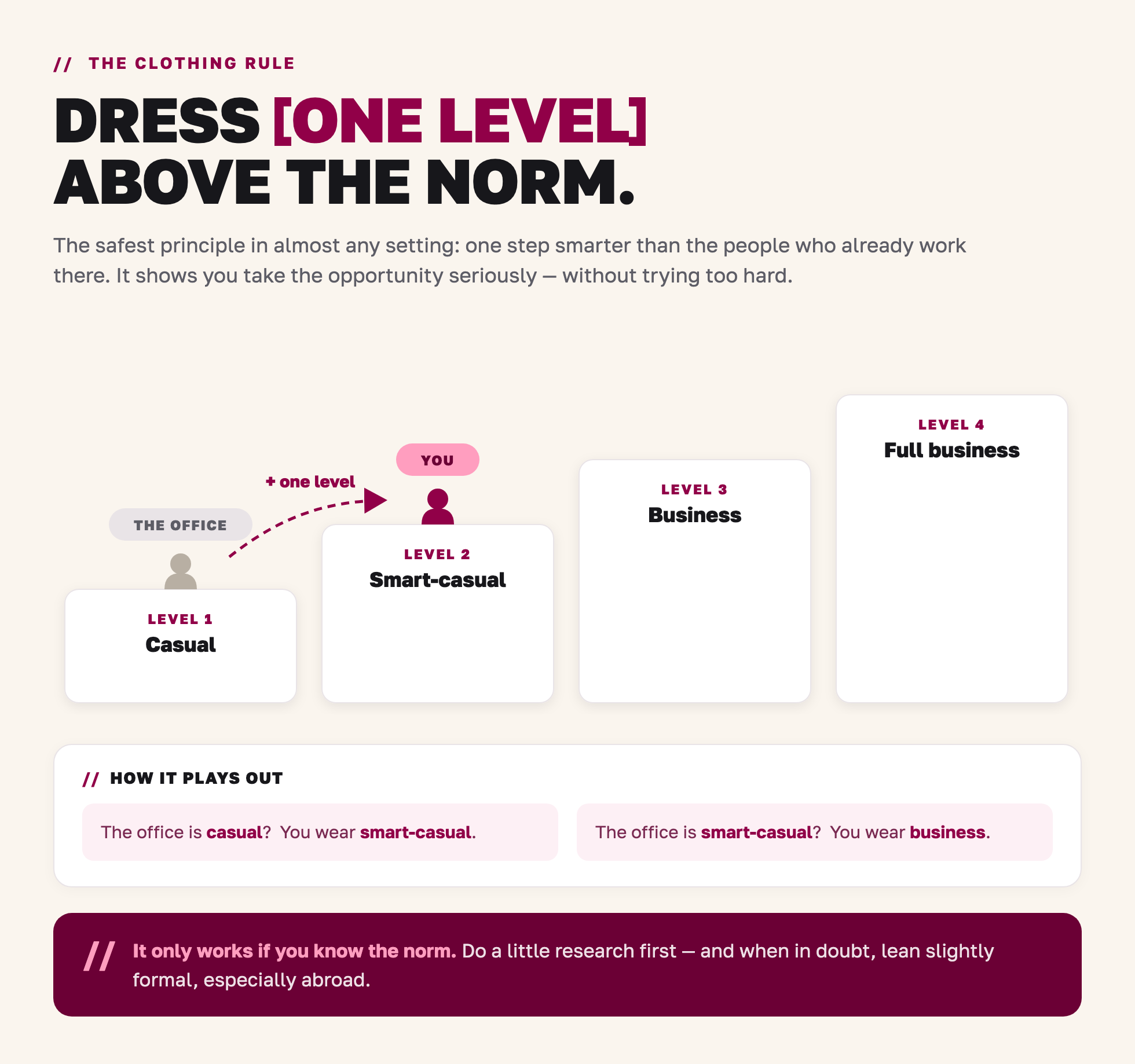
The clothing rule: dress one level above the norm
The safest principle in almost any setting is to dress one step smarter than the people who already work there. If the office is casual, wear smart-casual. If it is smart-casual, wear business. It shows you take the opportunity seriously without trying too hard. To apply it, you need to know the norm, so do a little research first.
Research the dress code
A bank and a startup expect very different things, and getting it wrong in either direction is a distraction. Check the company’s website and culture pages, look at how current employees present themselves publicly, and if you have a recruiter, simply ask what people wear.
What to wear by industry
| Sector | Interview attire |
|---|---|
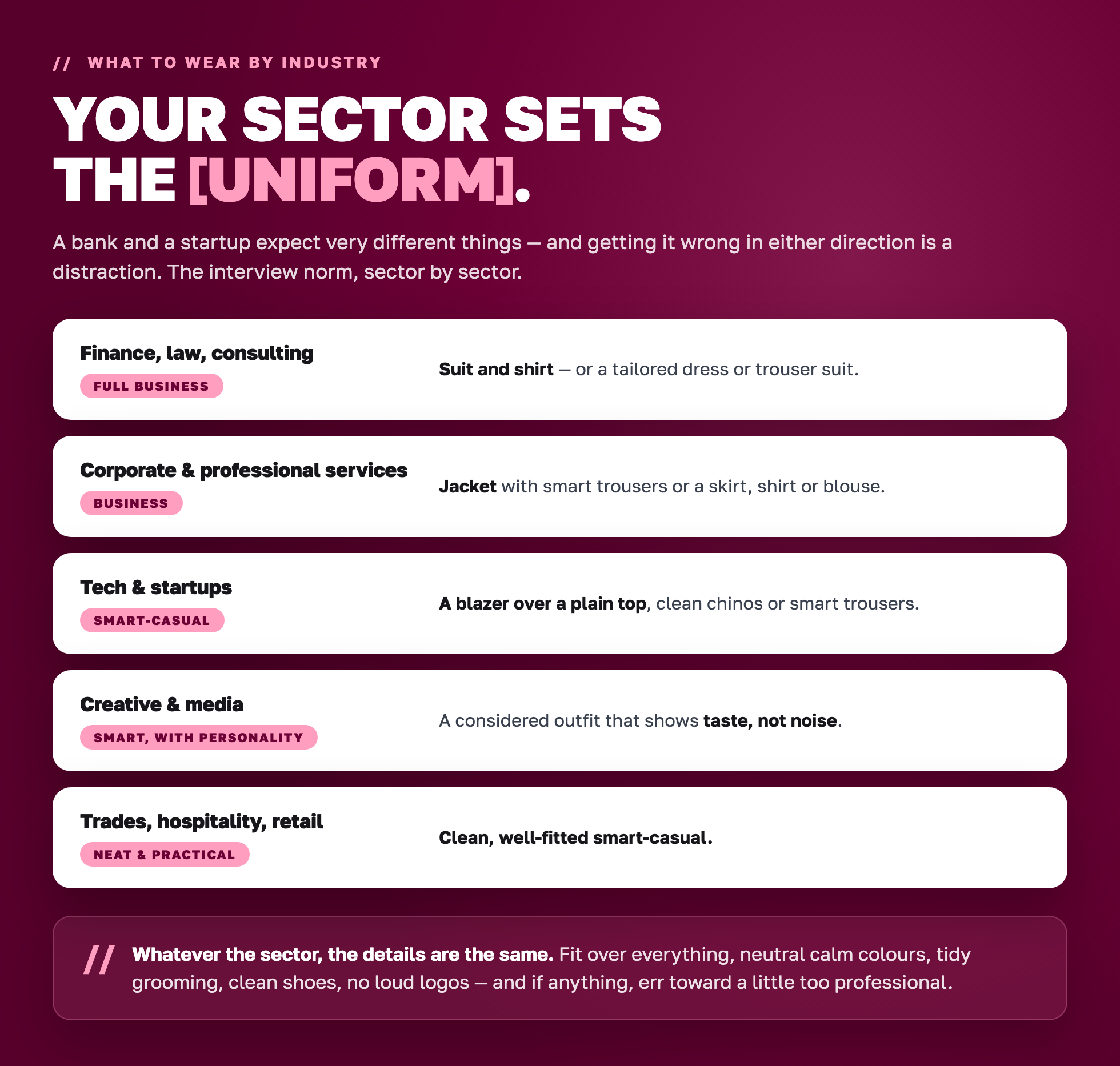
| Finance, law, consulting | Full business: suit and shirt, or a tailored dress or trouser suit. |
| Corporate and professional services | Business: jacket with smart trousers or a skirt, shirt or blouse. |
| Tech and startups | Smart-casual: a blazer over a plain top, clean chinos or smart trousers. |
| Creative and media | Smart with personality: a considered outfit that shows taste, not noise. |
| Trades, hospitality, retail | Neat and practical: clean, well-fitted smart-casual. |
Whatever the sector, the details are the same: fit over everything, neutral calm colours, tidy grooming, clean shoes, and no loud logos. If anything, err toward looking a little too professional rather than too relaxed.
Your face matters more than your outfit: the real smile
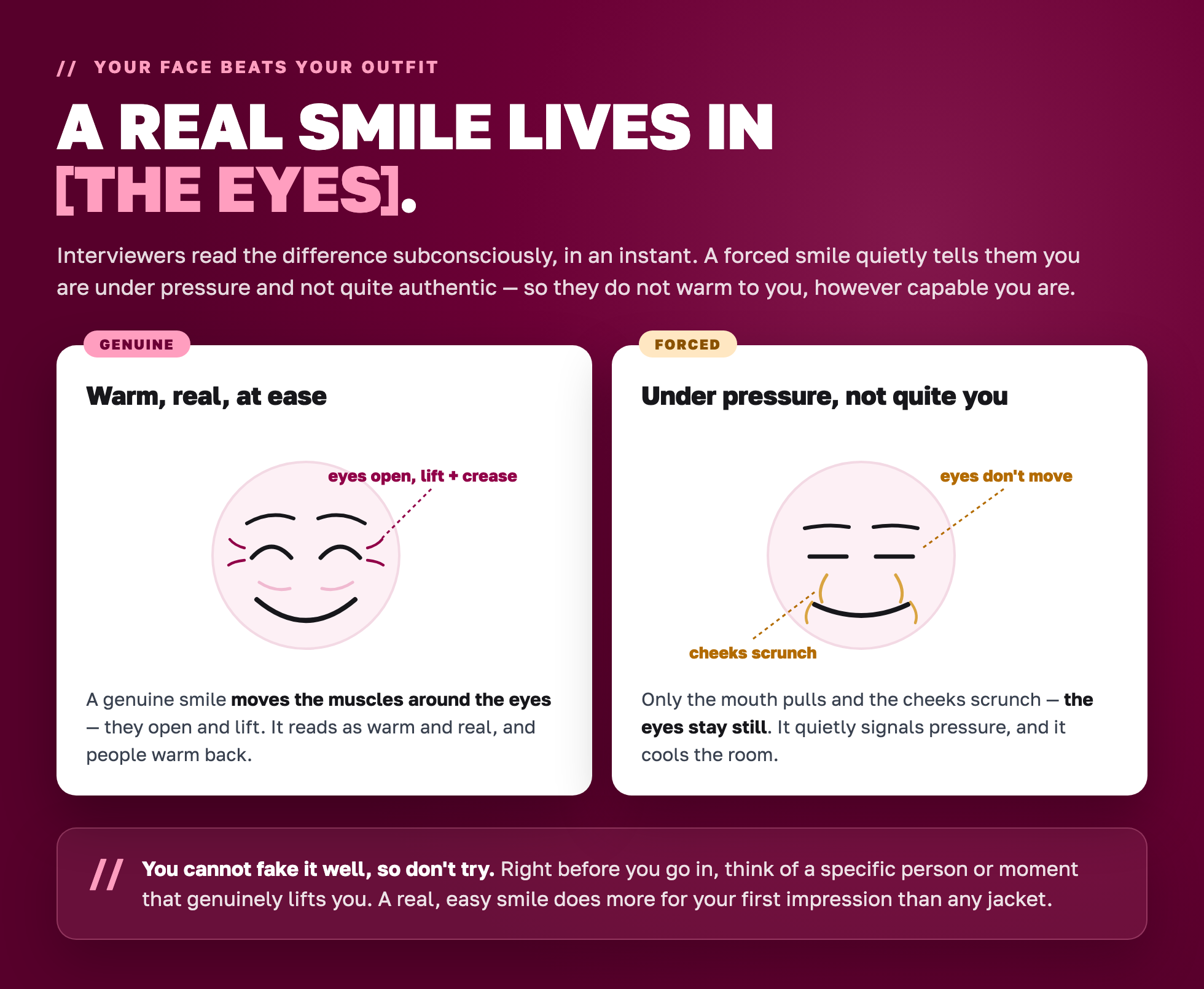
Here is the detail almost no guide mentions. A genuine smile moves the muscles around your eyes; they open and lift. A forced smile scrunches the cheeks and pulls the mouth without touching the eyes. People read the difference subconsciously in an instant, and a forced smile quietly tells them you are under pressure and not quite authentic, so they do not warm to you, however capable you are.
You cannot fake this well, so do not try. The fix is to actually feel a little of what you are smiling about: think of a specific person or moment that genuinely lifts you, right before you go on. It is easier once your nerves are managed. A real, easy smile does more for your first impression than any jacket.
Smiling too much gives your power away
The opposite mistake is just as costly. Constant smiling signals “I am just happy to be here,” like an intern, and it drains your authority. You do not want a frozen, serious face either. You want measured changes in expression, a smooth dial rather than an on-off switch that jumps from dead-serious to a big grin. Let your expression move with what you are saying.
Your hands pull focus on camera
Especially on video, every time your hands enter the frame the viewer’s attention leaves your words and follows the movement. Hands are also a rescue mechanism you reach for when you are slightly unsure, so they leak doubt. In person they matter less. On camera they can quietly wreck an otherwise strong answer.
The drill we give most people is simple: practise your answers sitting on your hands. You will feel the urge to bring them out, which tells you how much you lean on them. The goal is not to freeze; it is to cut hand movement by most of what you currently do, so your face and words carry the message.
Set up your camera to look calm and credible
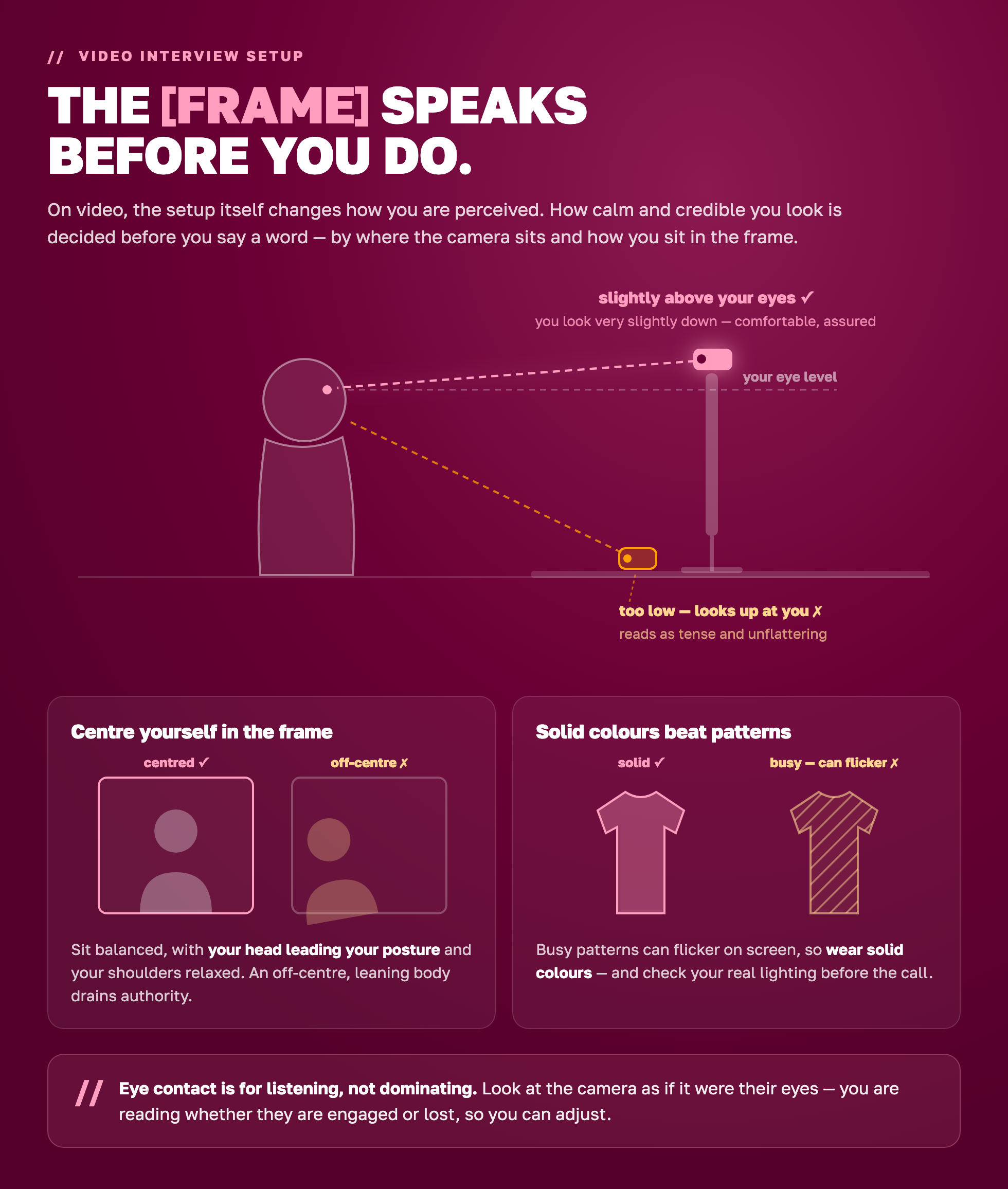
For a video interview, the frame itself changes how you are perceived.
- Raise the camera slightly above your eyes. Looking very slightly down at the viewer feels comfortable and assured. A low camera that looks up at you feels tense and unflattering.
- Centre yourself in the frame. An off-centre or leaning body drains authority. Sit balanced, with your head leading your posture and your shoulders relaxed.
- Use eye contact to listen, not to dominate. The point of eye contact is not to project authority; it is to read whether the other person is engaged or lost, so you can adjust. Look at the camera as if it were their eyes.
- Solid colours over busy patterns, which can flicker on screen, and check your real lighting before the call.
Dressing for an interview abroad
Standards vary by country, and what reads as smart at home may read as casual elsewhere. Much of Europe runs slightly more formal than parts of the US or the UK tech scene. When in doubt abroad, lean formal. It is far safer to be a little overdressed, and it signals respect for the local norm.
Your presentation practice plan
Presentation is a set of habits, so build them in stages over a week or two, in parallel with your other prep, rather than trying to fix everything in one mock interview.
- Stage 1: tame the hands and sit tall. For a few sessions, practise your answers while sitting on your hands, with your head leading your posture and your shoulders relaxed. Feel the urge to bring the hands out, and get used to letting your face and words carry the message.
- Stage 2: train the smile. On camera or in a mirror, practise a genuine smile and watch for the fake-smile scrunch. Learn the difference between measured expression and constant grinning.
- Stage 3: fix the frame. Set up your camera slightly above eye level, centre yourself, and sort your lighting. Then run a full mock on video and watch it back.
- Final step: dress rehearsal. A day or two before, put on the actual outfit, sit in it, and make sure nothing pinches or distracts. Comfort in your clothes is part of composure.
Summary and FAQs on presenting yourself in an interview
Get the clothes right so they disappear: one level up, clean, fitted, neutral. Then win the first impression where it is actually decided, with a genuine expression, controlled hands, a centred posture, and a camera set up to flatter you. The interviewer should remember you, not your outfit.
If you want a coach to watch how you come across on camera and fix it fast, use our free consultant picker tool. See also calming interview nerves and the full guide to passing a job interview abroad.