 By Andre Atallah, CEO of EP Advisory

Short answer: the Senior or Specialist Worker visa lets your current employer move you to its UK branch. Your UK pay must be at least £52,500 a year gross (about $70,400 at ECB rates of 2 November 2026) or the job’s going rate, if higher. Under £73,900 a year, you need 12 months with the employer outside the UK first. You can stay up to 5 years in any 6. It does not lead to settlement on its own.
This guide is for Americans who already work for a company with a UK office and want to move to London with it. The UK still calls this an intra-company transfer. Your employer moves you, so you skip the open job market.
You get the eligibility rules in plain words, the pay bar and what counts toward it, the business case to put to your manager, the package to ask for, and how to stay longer than the visa allows. Dollar figures on this page are at ECB rates of 2 November 2026 (£1 = $1.3419).
For nearly 10 years, we’ve helped more than 5,000 professionals find jobs abroad. Want to know if your CV will pass screening in the UK? Check your CV for free: a score in 30 seconds, then a fix for each problem.
Who qualifies for the Senior or Specialist Worker visa: four checks
If you pass four checks, a transfer is a paperwork job for your employer, not a job hunt for you.
The Senior or Specialist Worker visa is part of the UK’s Global Business Mobility routes. Hundreds of Americans come each year by transferring within their own employer. Home Office figures show 690 of these visas went to US main applicants applying from outside the UK in the year to June 2026.
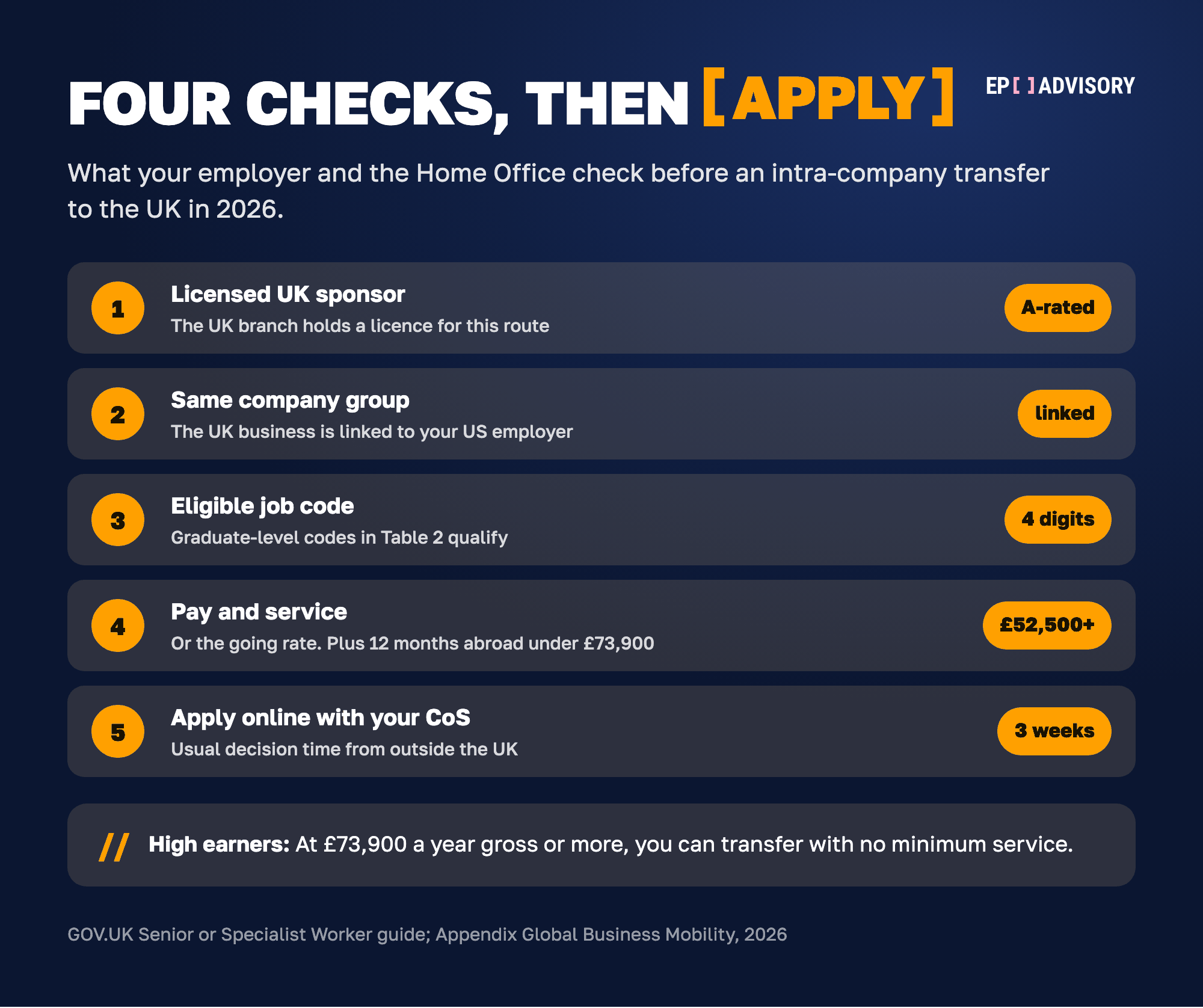
- The UK branch is a licensed sponsor. A sponsor is a UK employer the Home Office has approved to hire people from abroad. The licence must cover this route and carry an A rating. Ask HR or the mobility team.
- You already work for the group. The UK business must be linked to your US employer, for example as part of the same group. The UK branch cannot hire you out to a client as your main job.
- The job is on the eligible list. Each UK job has a 4-digit occupation code. Only graduate-level codes qualify: those listed in Table 2 of the Appendix Skilled Occupations, rated at degree level (RQF level 6) or above. Most professional and managerial codes are on it. Many technical and support roles are not.
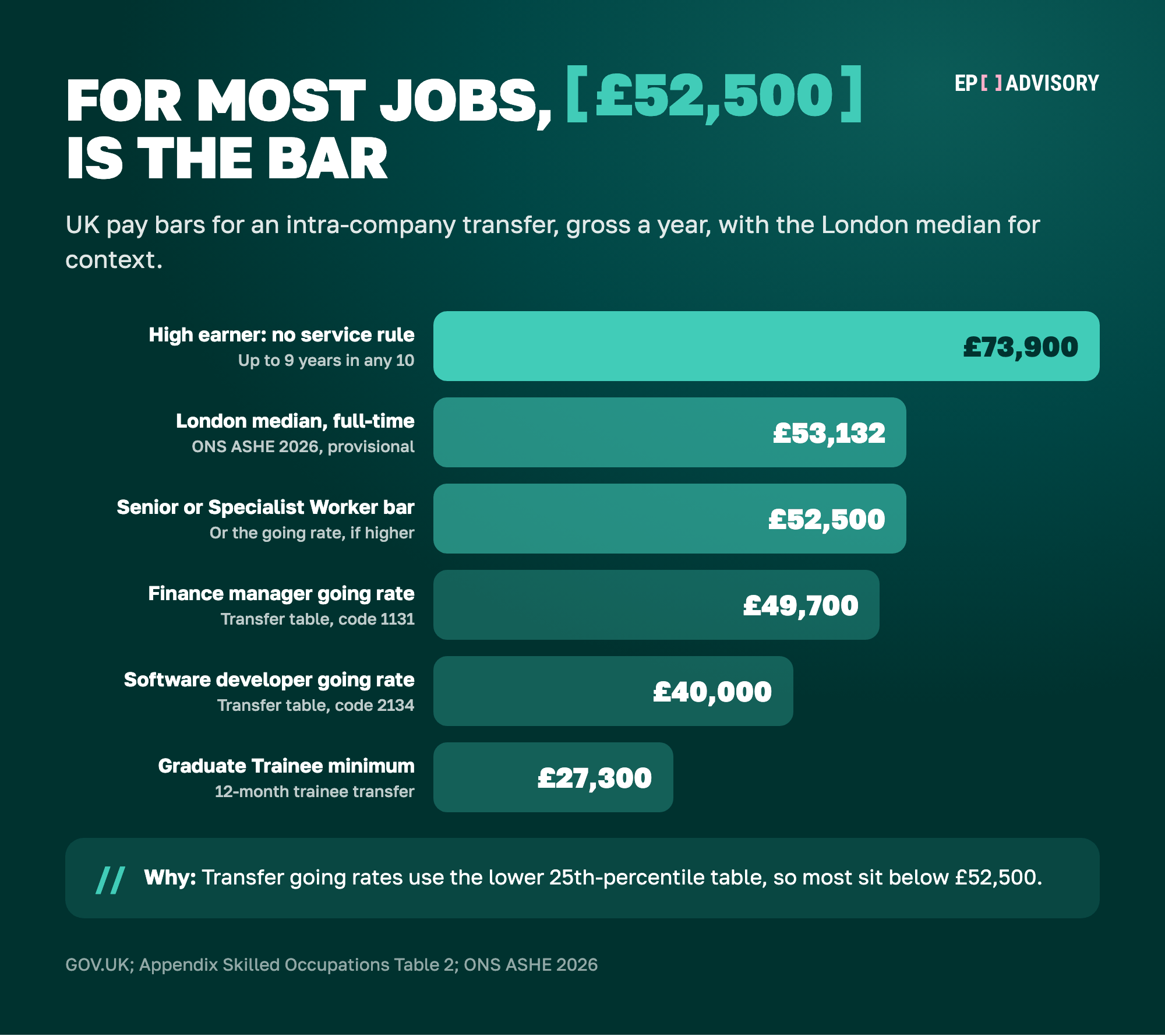
- You meet the pay and service rules. Pay must reach £52,500 or the going rate, whichever is higher. Below £73,900 (about $99,200) a year, you also need 12 months with the employer outside the UK.
The 12 months outside the UK can add up over separate spells. But you must have worked for the group without a break, in or out of the UK, from the start of those 12 months to the day you apply. Only listed breaks, such as statutory parental leave, sick leave or jury service, are allowed. Payslips or bank statements prove it.
This route has no English test. Your employer then assigns a certificate of sponsorship, or CoS. That is an electronic reference number, not a paper certificate. You apply online within 3 months of getting it, and no more than 3 months before your start date. A decision usually takes 3 weeks from outside the UK.
The £52,500 pay bar, and what counts toward it
For most professional jobs, £52,500 is the number that decides, not the going rate.
The going rate is the minimum the Home Office sets for each occupation code. For transfers, it comes from a lower table than the one used for new hires: the 25th percentile of UK pay, not the median. The tables sit in the Appendix Skilled Occupations, Table 2.
| Job (occupation code) | Transfer going rate, gross a year | Bar you must meet |
|---|---|---|
| Software developer (2134) | £40,000 | £52,500 |
| IT manager (2132) | £43,000 | £52,500 |
| Management consultant or business analyst (2431) | £36,000 | £52,500 |
| Finance manager or director (1131) | £49,700 | £52,500 |
| Marketing and sales director (1132) | £60,000 | £60,000 |
| IT director (1137) | £61,200 | £61,200 |
So most people only need to check one number. For context, the median full-time salary in London is £53,132 a year gross (ONS, 2026 provisional). Our guide to salaries in the UK shows typical pay by job.
What counts is set out in the Global Business Mobility rules. This is where a package that looks big can still fall short.
- Counts: guaranteed basic gross pay, plus guaranteed allowances such as London weighting, a mobility premium or a cost-of-living allowance.
- Counts, with a cap: a housing allowance, up to 30% of the total package.
- Does not count: bonuses (even guaranteed ones), overtime, shift pay, equity, employer pension and National Insurance, health insurance, school fees, a car, one-off payments such as a joining bonus, and payments toward visa fees or the health surcharge.
- Hours: only pay for the first 48 hours a week counts toward £52,500, so long hours do not lift a low salary over the bar.
If your base is £48,000, a guaranteed £5,000 London allowance can take you over £52,500. A £10,000 bonus cannot. Ask for guaranteed items in writing in your assignment letter.
Score your CV in 30 seconds, then fix its biggest problems one by one. Both free.
Free, no card. A free account unlocks every fix.

How to get picked: the business case your manager needs
Most transfers start with an employee who asks, so ask with a plan your manager can approve.
Your manager has to defend the cost to their own boss. A short written case makes that easy.
- Name the UK need. A client, a team, a product launch or a gap in skills that you fill. Tie it to revenue or delivery, not to your wish to live abroad.
- Show you are ready now. Your 12 months of service, your occupation code and your planned salary against £52,500. Do this homework before HR does.
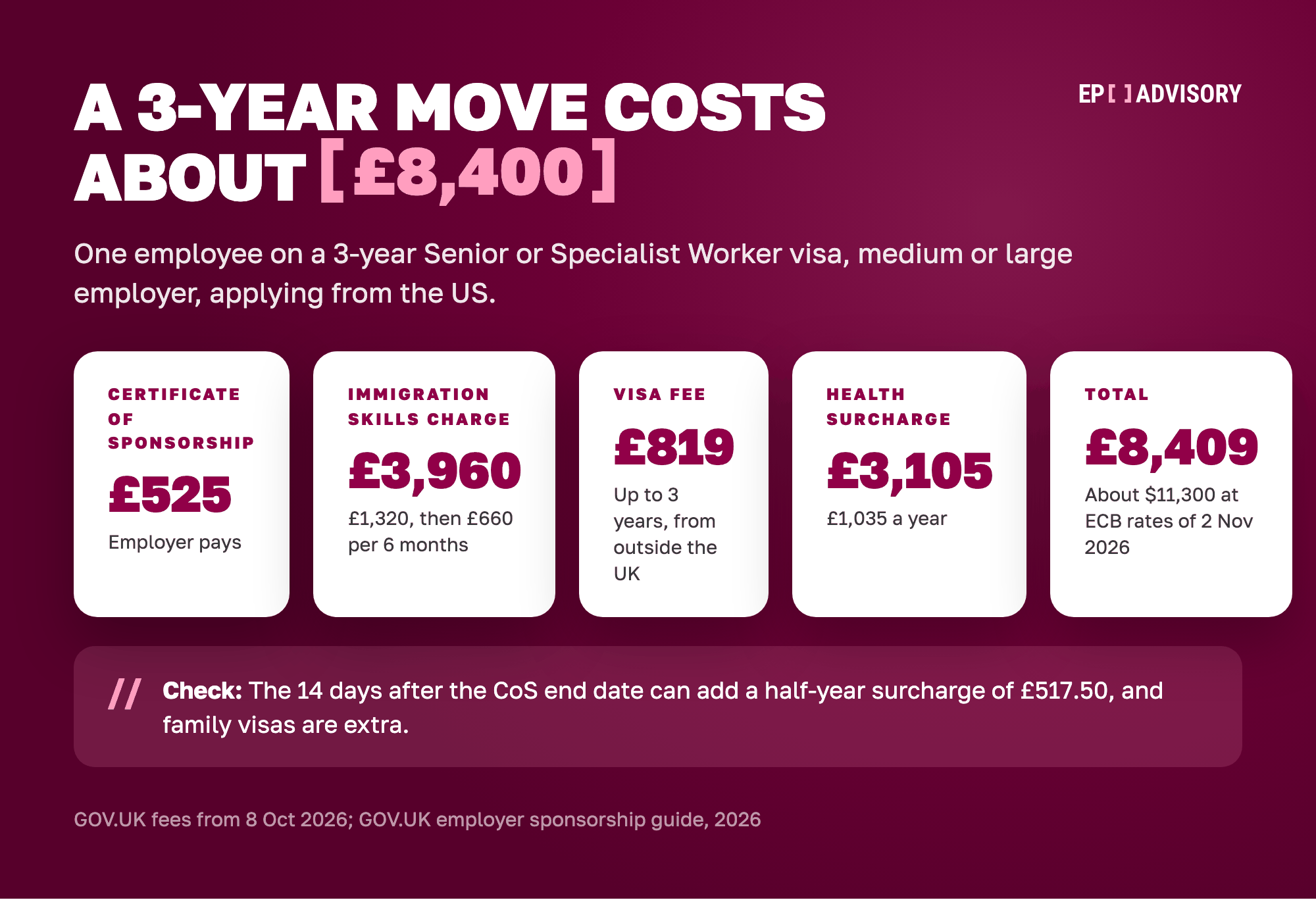
- Put a number on the cost. Managers fear hidden costs. Showing the real total, about £8,400 for 3 years, makes you look like the low-risk option.
- Offer a fixed term. A 2 to 3 year assignment with clear goals is easier to approve than an open-ended move.
The employer pays two costs it cannot pass on to you. The CoS costs £525. The Immigration Skills Charge is £1,320 for the first year and £660 for each extra 6 months for a medium or large company. The employer guide on GOV.UK says the company risks its licence if it asks you to pay that charge. Who pays the visa fee and the health surcharge depends on company policy, so ask.
Here is the full cost of a 3-year move for one person applying from the US, with a medium or large employer, at GOV.UK fees from 8 October 2026:
- Certificate of sponsorship: £525, paid by the employer.
- Immigration Skills Charge: £3,960 (£1,320 for the first year, then 4 x £660), paid by the employer.
- Visa fee: £819 for up to 3 years, from outside the UK.
- Immigration Health Surcharge: £3,105 (3 x £1,035 a year). This is the charge that gives you NHS care.
- Total: £8,409, about $11,300 at ECB rates of 2 November 2026.
The surcharge is charged in 6-month blocks on the full length of the visa. Your visa runs 14 days past the CoS end date, so the bill may include an extra half year (£517.50). The GOV.UK payment step shows the exact figure. Family visas, relocation and adviser fees are on top.
Your internal application still gets read like a hiring file, often by a UK manager. Use a UK-style CV: two pages, no photo, results first. Our guide to the UK CV vs the US resume shows what to change. Getting ready to apply for jobs in the UK? Check your CV for free: see it the way a recruiter does, then fix each problem.
The package to negotiate before you sign
A transfer is the best moment you will have to negotiate, because the company already wants you there.
Settle these points in the assignment letter before the CoS is issued.
- Assignment or local contract. On assignment, you usually stay on US pay and benefits plus allowances. On a local contract, you move to UK pay and UK benefits. Ask which one, and what happens when it ends.
- Housing. A housing allowance or company flat for the first months. Remember the 30% cap if it is part of your pay for the visa.
- Tax equalisation. Some companies pay any extra tax so you are no worse off than at home. Ask if the policy exists and who prepares your returns.
- Visa costs for the family. Ask the company to pay the visa fee and health surcharge for you, your partner and your children.
- Home leave and return. Flights home each year, and a paid move back if the assignment ends.
- Your job afterwards. What role you return to, or whether the company will support a switch to Skilled Worker to stay.
UK take-home pay is lower than gross pay suggests: £60,000 a year gross leaves about £45,357 after UK income tax and National Insurance (England, 2026-27 tax year, no pension or student loan). For scripts and timing, see our guide on how to negotiate salary.
US tax and Social Security: what stays in America
As a US citizen you keep filing US taxes, but a short posting can keep you out of UK social security.
- Social Security. Under the US-UK social security agreement, a worker posted by a US employer stays in the US system if the posting is not expected to last more than 5 years. A certificate of coverage proves this, so you do not pay UK National Insurance on top. Ask your employer’s payroll or mobility team to arrange it before you move.
- Income tax. You pay UK income tax on UK earnings. The IRS says tax treaties do not reduce the US tax of US citizens. You still file a US return every year.
- US tax relief. The foreign earned income exclusion lets you leave out up to $132,900 of foreign earnings in 2026 (IRS Rev. Proc. 2025-32). Foreign tax credits are the other main tool.
The right setup depends on your pay, your state and your company’s policy. Talk to a cross-border tax adviser before you sign the assignment letter.
How long you can stay, and who comes with you
The visa lasts up to 5 years at a time, but there is a cap on total time.
- Each grant: the length on your CoS plus 14 days, up to 5 years. You can extend with the same employer.
- Under £73,900: no more than 5 years in any 6-year period.
- £73,900 or more: no more than 9 years in any 10-year period. Only pay for up to 48 hours a week counts toward £73,900.
- What counts: all time on Global Business Mobility visas and the old intra-company transfer visas.
GOV.UK gives an example. You spend 3 years on this visa, then 6 months in Sweden, earning under £73,900. You can come back for only 2 more years. After that, you need another 6 months outside the UK. There is no separate cooling-off rule. The limit is a rolling 6-year (or 10-year) window, which is why time abroad only helps once older UK time drops out of it.
Your partner and children under 18 can come as dependants. Their visas end when yours does. Your partner can work in the UK, including self-employment, except as a professional sportsperson or sports coach. Each needs funds unless your employer certifies them or you have all been in the UK for 12 months: £285 for a partner, £315 for the first child and £200 for each other child. You need £1,270 yourself, held for 28 days. You cannot claim public funds. You cannot take a second job, unless you held an intra-company transfer visa before.
Want to stay for good? Plan the switch to Skilled Worker
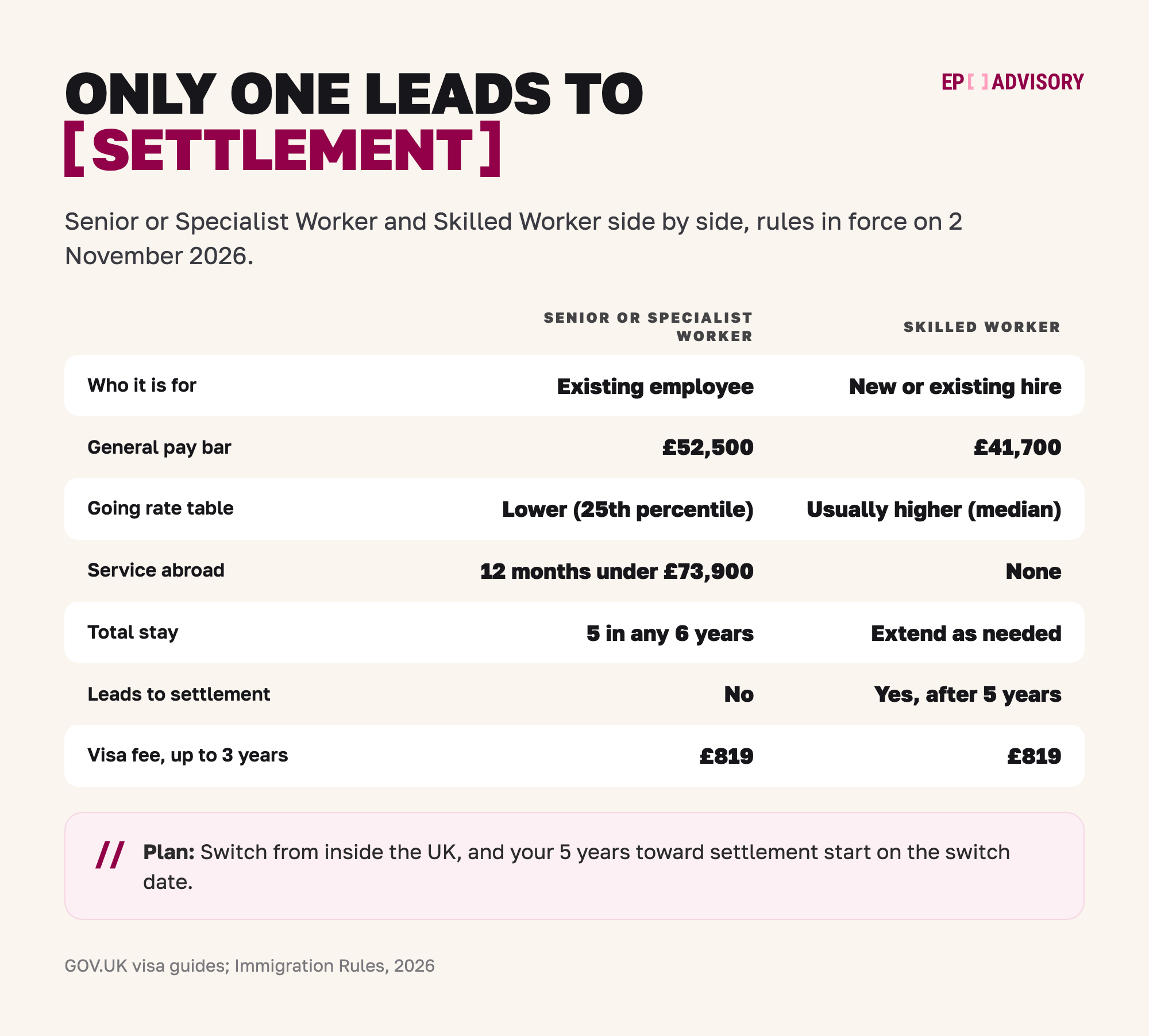
Time on this visa does not count toward settlement, so the clock only starts when you switch.
Settlement, called indefinite leave to remain (ILR), lets you live and work in the UK with no time limit. The ILR rules on GOV.UK let you combine 5 years on Skilled Worker, Global Talent, Scale-up and some other routes. Senior or Specialist Worker is not on that list.
The fix is a switch. You can move from this visa to the Skilled Worker visa from inside the UK. Your employer sponsors you again, with a new CoS and charge. You then need the Skilled Worker pay rules: £41,700 (about $56,000) or the going rate, whichever is higher. That going rate usually comes from Table 1, which is based on the median and is higher. For software developers it is £54,700, against £40,000 for a transfer. The Budget of 28 October 2026 announced a move to 25th-percentile rates for Skilled Worker from spring 2027, but that is not in the rules yet. Our guide to the Skilled Worker salary threshold explains those rules.
| Plan | Year 0 to 2 | Year 2 to 7 | Earliest ILR under today’s rules |
|---|---|---|---|
| Stay on transfer | Senior or Specialist Worker | Max 5 years, then leave | Never from this visa |
| Switch after 2 years | Senior or Specialist Worker | Skilled Worker | Year 7 (5 years after the switch) |
| Skilled Worker from day one | Skilled Worker | Skilled Worker | Year 5 |
If you already know you want to stay, ask on day one whether the company would sponsor you on Skilled Worker instead. Skilled Worker can be extended as many times as you like while you meet the rules. Long residence, 10 years of continuous lawful stay, is another way to settle. Check on GOV.UK which visas count toward it before you rely on it. The ILR fee is £3,226.
Settlement rules may change. On 2 November 2026 the Home Office announced earned settlement in a government paper (CP 1707): 3 years for the highest earners, 5 years above £50,271 and a 10-year default. It is not in the Immigration Rules yet and has no start date. Plan on today’s rules, and check the current rules on GOV.UK or with a regulated adviser before you choose a route.
Next: if your employer will not move you, our guide on how to get a job in the UK as an American covers every other route, and our list of UK companies that sponsor visas helps you find a new sponsor. If you already have UK work rights, see working remotely in the UK for a US company.
Earlier in your career: the Graduate Trainee option
If you are on a graduate programme and below £52,500, a shorter transfer may fit.
The Graduate Trainee visa is for people on a graduate training programme for a managerial or specialist role.
- Pay: at least £27,300 a year gross (about $36,600) or 70% of the job’s going rate, whichever is higher.
- Service: 3 months with the employer outside the UK, right before you apply.
- Length: up to 12 months. It cannot be extended, but you can apply for a new one from outside the UK.
- Fee: £340, and the CoS costs the employer £55.
It counts toward the same 5-in-6 limit. Use the year to build a UK track record, then ask about a longer move.
Your transfer plan in six steps
- Run the four checks. Licence, group link, job code, pay and service. Note the date you reach 12 months.
- Find your bar. Look up your job’s going rate in Table 2. Your bar is that rate or £52,500, whichever is higher.
- Write a one-page business case. The UK need, your readiness, the cost and a fixed term.
- Agree the package in writing. Do it before the CoS is issued.
- Gather the evidence. 12 months of payslips, and £1,270 held for 28 days unless the employer certifies it.
- Plan the long game. If you may stay, agree when you will switch to Skilled Worker.
If the transfer is a no, a direct move is still open. Our guide to jobs in the UK for foreigners compares the routes for every nationality.
Key takeaways
- The Senior or Specialist Worker visa moves you to your employer’s UK branch, with no job hunt.
- Pay must be £52,500 a year gross (about $70,400) or the going rate, and for most jobs £52,500 is the higher one.
- Below £73,900 a year, you need 12 months with the employer abroad first.
- Guaranteed allowances count toward the bar; bonuses, equity and relocation do not, and housing counts up to 30%.
- A 3-year move with a medium or large employer costs about £8,409 (about $11,300) in fees, charges and the health surcharge, if the employer pays it all.
- You can stay up to 5 years in any 6, or 9 in 10 at £73,900 or more.
- Transfer time does not count toward settlement, so switch to Skilled Worker early if you want to stay.
See what a recruiter sees, then fix it before you apply. An instant score, then the fix for every problem.
Free, no card. A free account unlocks every fix.
Frequently asked questions
What is the minimum salary for the Senior or Specialist Worker visa?
It is £52,500 a year gross or the going rate for the job, whichever is higher. For most professional jobs the going rate is lower, so £52,500 is the bar. Only guaranteed basic pay and guaranteed allowances count. Bonuses do not.
Is the Senior or Specialist Worker visa the same as an intra-company transfer?
Yes. It replaced the Intra-company Transfer visa in 2022, and the Immigration Rules still say it is often called an intra-company transfer. It is part of the Global Business Mobility routes.
Can I get indefinite leave to remain on a Senior or Specialist Worker visa?
No. It is not a route to settlement and its time does not count toward the 5 years for ILR. To settle, you would need to switch to a route that leads to settlement, such as Skilled Worker, and meet its rules.
Can I switch from a Senior or Specialist Worker visa to a Skilled Worker visa?
Yes, from inside the UK. Your employer must sponsor you on Skilled Worker and you must meet its pay rules, which often use a higher going rate. Your 5 years toward settlement start on the date of the switch.
Does my partner get to work in the UK?
Yes. Your partner can come as your dependant and work, including self-employment, except as a professional sportsperson or sports coach. Their visa ends on the same date as yours. They need £285 in funds unless your employer certifies their maintenance.